
Disclaimer: I am NOT a doctor. I'm also not a master herbalist, a homeopathic practitioner, nor do I have any formal training in any of the healing arts. I'm just a mom sharing what I found. This post does not contain medical advice and is for informational purposes only. I'm likely wrong about some things and right about some others- just sharing notes and my opinions. Herbs and homeopathics are powerful and may interact in negative ways with some medications, so I am obligated to recommend asking your professional care provider before taking any holistic remedies.
Thoughts on Homeopathy
I have been a little nervous to write this post because a few people have told me that they were excited to see what I would have to say about it, and the truth is, I don't have a lot to say, leastwise by experience. I haven't used very much homeopathy myself in the past. But I know they work! My midwife has shared them to me when in labor, which was helpful. And my children have benefited from allergy elimination therapy at Vivid Healing, which partially employs homeopathics. Food intolerances are gone, acne has cleared, and even sibling relationships have improved. I've been delighted by the results, and have enjoyed seeing my children stand in awe at the improvements, and the methods. Some of them were very skeptical, but the results have been real and they cannot deny it!
Herbs feel more familiar and are more intuitive for me to use at home, and they took center stage during this illness. However, I have a few friends who use them for childhood illnesses and have heard so many positive stories. I even have a friend who treated measles almost exclusively with homeopathy, and to great effect. It is an art that I am keen to learn more about.
Having said that, I'm happy to share the resources I found! We bought a lot of homeopathics, and we did use them, albeit not efficiently. I thought like an herbalist, but homeopathics are different. I combined doses based on descriptions that were only similar to my kids' symptoms, and gave them when they may not have been needed at all since most of my kids had straightforward cases. But I did my best to learn as I went, bought a few books, and by the end of our adventure, I had read enough to have a better understanding. We even had an experience with Apis specifically, which was very beneficial to our child.
Before the onset of our first acute phase, I made a list of every homeopathic that was mentioned as being useful for measles, and bought every one that the local herb store had available. I also bought aconite online and ended up asking for apis when we felt it was needed, and a local mom in a Facebook group helped me out. I wanted to be prepared!
The thing about homeopathics that people have often told me is that they are very safe to use and they're virtually impossible to overdose on in one sitting since they are so diluted. That's comforting, but it still left me somewhat confused about how best to use them. There's a certain level of education that is needed to utilize homeopathics effectively. Obviously. Herbalism requires education too, as do other healing arts. A lot of new mamas work with a homeopathic practitioner, which is definitely a great way to go. I gave my kids a lot of homeopathics during measles, but I know a skilled homeopath would have done things far better than I did and would have likely seen more dramatic results.
Myths and Misapprehensions- paraphrased from Miranda Castro
I was aware before this adventure of the basics of what homeopathics are, and how they're made. My life has benefited from their use, even if I was a passive recipient as a birthing mother. However, I found Castro's myth busting chapter 3 of her book "The Complete Homeopathy Handbook" to be rather enlightening.
First myth: Homeopathy is Safe. I'm not going to tell you that homeopathy is unsafe, but hear me out. I have heard people tell me stories of their tiny children getting into the homeopathics and eating a whole bottle... or two or three. The wonderful thing about homeopathics is that they are so diluted as to make overdosing like this to be safe. The biggest casualty of an event like that is a hit to the wallet. But the toddler will be fine. No need to pull out the lobelia and induce vomiting, and don't bother calling poison control, even if the bottle they ate was arsenicum album. Phew! But that is not how homeopathics are overdosed anyway. It is by taking too many pills *over a period of time* that one can take too much. Castro calls this "proving the remedy", or in other words "to suffer from the symptoms that the remedy was supposed to cure." Once a remedy has given the desired results, you should stop taking it immediately, which is different from the way herbs work, and certainly different from antibiotics where you are supposed to finish the whole bottle. If you don't stop, the progress made will be lost and they may worsen again. Furthermore, if the remedy did not match the "picture"- aka your situation with its physical and emotional state, you may experience symptoms that you never had before you took the homeopathics.
She gives a story of a 6-month-old baby who was treated at a local hospital that was struggling with exhaustion "in a state of collapse". The nurse found out that she had been taking homeopathics to treat colic, and had been given this remedy several times a day. After she stopped taking it, she recovered. When a remedy is given for too long and becomes the cause of the symptoms, it no longer can cure them.
Another thing that can go wrong with homeopathics is that if the wrong remedy is prescribed and it does give the patient additional symptoms, the response is often to treat that symptom with another remedy, which in turn may cause additional symptoms. A professional homeopath will have ways of tracing things back to the original cause, and getting this assistance is recommended.
Finally, a very rare complication from homeopathics is symptom suppression. The goal is to restore the body's state of vital health so that the body can heal itself more readily. However, if the wrong remedy is given, suppression may happen. In her example, a skin condition may be suppressed, where the skin heals, but the patient feels worse than before. The wrong remedy was likely (self) prescribed, and again she recommends seeking professional advice.
All of these complications are rare, but they are a possibility. To me, the fact that they can, in some instances, cause some harm is also a testament that they are potent enough to be affective to do good. There are critics of homeopathy who insist that through so many dilutions we are foolish to think we are getting any benefit at all because at that point, it's just expensive sugar. Mere sugar would not affect patients in this way.
Second myth: Homeopathy is a form of Herbalism. Herbalism is older than recorded history, and is the only form of medicine practiced by the animal kingdom. My mother recently gave me an example of how their cow suffering from mastitis, through great effort, got out and went straight for the comfrey growing in the garden, eating all of it and touching nothing else. Her mastitis soon cleared. Homeopathy, on the other hand, is roughly 200 years old and is not limited to plant use. Minerals, metals, poisons, and even disease products are used in their creation. Homeopathy is actually not "natural". They are made in a lab. It is, however, holistic in that it treats the whole person. A single remedy can cure a host of ailments when they are related to the same core problem and the problem fits. Aim small, miss small.
I will diverge from Castro and quote from Thomas Easley and Steven Horne's "The Modern Herbal Dispensatory", pages 136-137 to better expound another of Castro's points;
"Herbs can be used as single remedies in much the same way that homeopathic remedies are. Each herb has a unique combination of actions and properties and when a person's overall symptom picture very closely matches that of a single herb, very powerful effects can be created using single remedies.
"Most herb books focus primarily on single herbs, but ironically, it's harder for a beginner to see results with single herbs than it is with well-crafted herbal formulas. It can be likened to the difference between using a rifle and a shotgun to hit a target. Using single herbs is like using a rifle. It has a lot of power, but you have to know how to aim it properly to hit the target.
"A formula, on the other hand, is like a shotgun. You may not hit the target with as much concentrated force, but your aim doesn't have to be as good. This is because an herbal formula combines many herbs that work on multiple causes of a problem...
"To paraphrase Michael More, a famous southwestern herbalist, single herbs have subtle and deep actions. Combinations tone down those subtleties to a gray background noise and leave the predominant effects of the herb intact. The literature of the Eclectics, a group of medical doctors who used herbs in the nineteenth century, emphasized utilizing the subtle effects of the herbs and matching all of a person's problems to one herb. However, in actual practice, they frequently resorted to tried and true formulas."
My mistake with homeopathy for my measly kids was in how I tried to figure out which remedies to use. I expected they would need multiple. I tried matching the descriptions of symptoms under the remedies to my kid's experience. Instead, I should have been focusing on finding the one homeopathic remedy that would best fit their needs. I should have paused from the reading and created a clear picture of what they were experiencing, written down a list of their physical symptoms, their behaviors, and their emotional state, and THEN matched those symptoms to the appropriate remedy.
Third myth: Homeopathy is a form of vaccination. I have seen a lot of people on social media ask about their similarities. The thought process is that the patient is given a small quantity of the disease he already has in order to make him immune to it. Isn't that what vaccines do, just without all the nasty adjuvuncts, preservatives, and foreign DNA? From Castro:
"This is not true. Homeopathy and vaccination have similar, not the same, concepts and very different practices. Vaccines work on the physical body in a very specific way, in that they stimulate the immune system directly to produce specific antibodies as if that person had contracted that particular disease; in so doing they are, of course, stressing the immune system. Many vaccines have been known to produce permanent side effects. They must be tested on animals and then on humans to verify their safety, and even then children and adults are often damaged on a physical, emotional or mental level.
"A homeopathic remedy works in a totally different way, as a reading of Chapter 2 will again bear out. Homeopathic remedies affect the energy patterns or vital force of a person and by so doing stimulate the body to heal itself. They are administered orally in a diluted (and safe) dose as opposed to being introduced directly into the bloodstream, as is the case with vaccination, thereby bypassing the body's natural defense system and stressing it in a way that is not fully understood. Homeopathic medicines are not tested on innocent animals and do not have side effects."
I will also add that attenuated viruses for vaccines are weakened by a process of "passaging". The measles strain we have today in the MMR and MMRV vaccines comes from the Moraten strain. The virus was passed through 98 chicken and human cell cultures to weaken the virus. After attenuation, they only had a small amount of virus, and they needed to grow more on a substrate. For measles and mumps, chick embryo cell cultures were used. For rubella, they used WI-38, which is from a 3-month gestation aborted fetus. It was an elective abortion, but the mother was not informed, nor did she give consent. The virus used in the MMR vaccine has been highly stressed through this process.
Contrawise, the virus used to make homeopathic nosodes are attenuated through dilution. From Kate Birch and Cilla Whatcott's book "The Solution", page 26: "Homeopathic nosodes, are attenuated through a careful process called 'potentization.' Potentization is a method by which the original pathogen is inactivated through a series of repeated dilutions. Each dilution is followed by 'succession', or the forceful striking of the vessel containing the solution against a hard surface. With the pathogen diluted to the point of no original molecules, and having been successed, only its energetic frequency remains. It is no longer virulent or dangerous in any way... Nosodes are made without additives, adjuvants (chemicals intended to increase the action of vaccines), or preservatives. Nor are they incubated on any animal or human fetal tissue. Nosodes are administered orally, one at a time. By touching on the mucus membranes of the mouth, the body's first line of defense, they stimulate the normal order of immune system function."
Vaccines and homeopathic nosodes very different in how they work and how they are manufactured.
Fourth Myth: Homeopathic remedies are placebos. "This myth can be rephrased to read 'You need to believe in it for it to work.'" Homeopathics are widely used in veterinary clinics, as well as on babies. A sick dog is not going to be affected by the placebo affect. Properly prescribed homeopathics will work regardless of the beliefs of the person receiving it. The placebo effect is real, which is a testament to the power of our minds in shaping our lives. But the placebo effect is not powerful enough to explain the consistent positive outcomes homeopathy has had worldwide in so many hospital and clinical settings. The lay person can buy homeopathics and may not take the proper remedies for their situation. When the wrong remedy is taken, and it does not work, it does not mean that homeopathics do not work. It means that better education was needed so that the patient could have been given the the correct remedy.
Fifth Myth: Homeopathy is mysterious and unscientific. Homeopathic remedies are prepared in a pharmacy or a laboratory. There are standards that must be met, and these standards are based on research. Castro recommends Harry Coulter's book "Homeopathic Science and Modern Medicine (The Physics of Healing with Microdoses)" for more information. Many trials have been conducted to prove the effectiveness of homeopathic medicines. There is nothing esoteric about their creation. Neither white magic nor alchemy are used.
Reviewing Kate Birch's book as we treated Measles
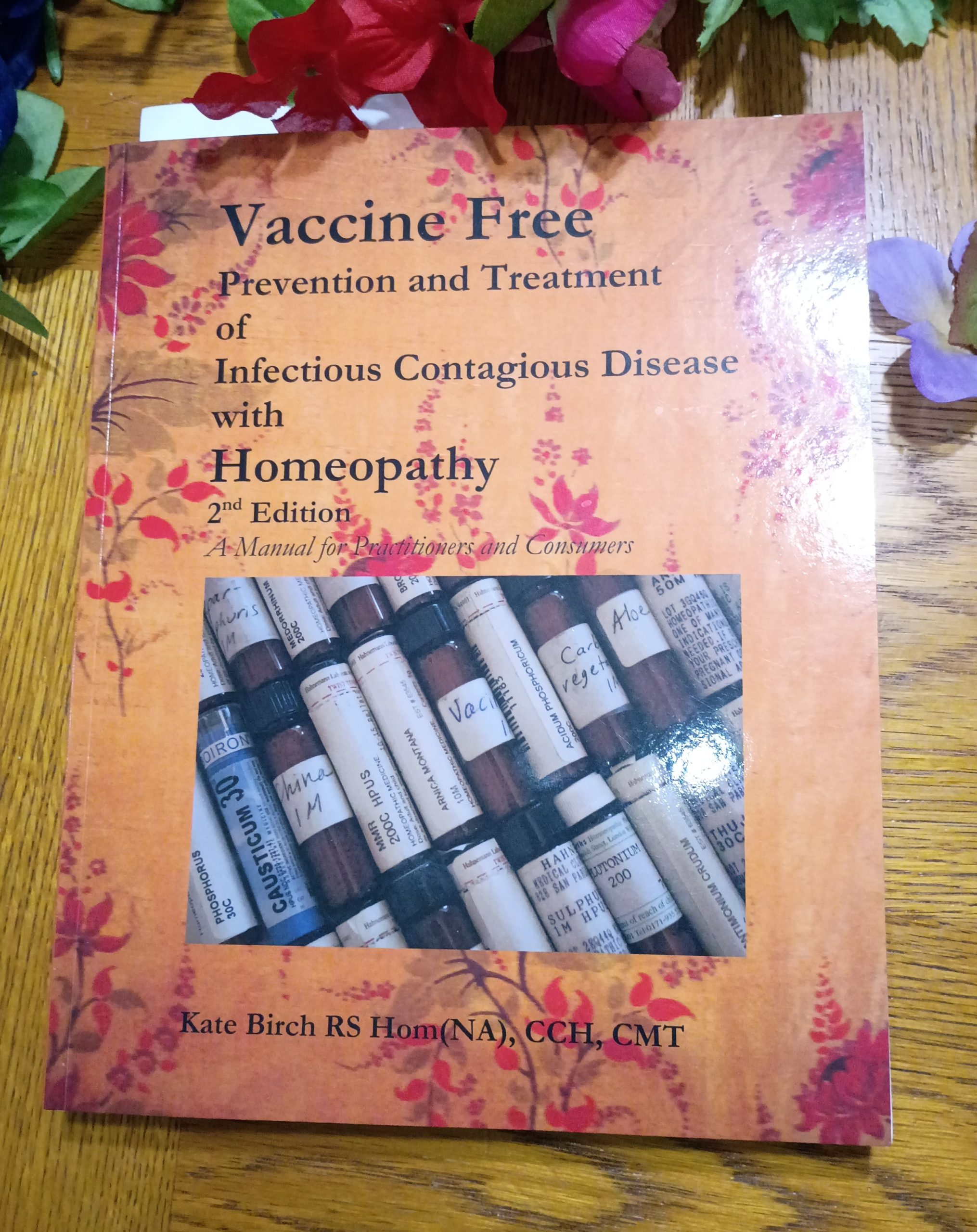
"Vaccine Free Prevention and Treatment of Infectious Contagious Disease with Homeopathy" by Kate Birch was my main reference guide. A friend shared a file from this book with me when I was asking about treating measles. It was impressive, and I quickly ordered it and will be grateful to have it in my personal library long-term. It has a huge section on understanding measles itself, followed by homeopathics that are useful for measles. The measles section lists several beneficial homeopathics and the symptoms that indicate their use. It was by far the most comprehensive guide among my homeopathic books.
In addition to eight full pages dedicated to understanding and treating measles specifically (not just a paragraph or a single page), there are chapters dedicated to understanding homeopathic principles, philosophy and treatment of fevers, homeoprophylaxis and treating vaccine injuries with homeopathy.
Whether or not one approaches treatment of childhood illnesses with homeopathy, I highly recommend this book to anyone wishing to better understand the illnesses themselves and the roles that they play in our overall health. It really is in a class all of its own.
From Birch's book, page 154, "Homeopathic care for measles or rubella is very proficient and will help the disease resolve with the least amount of suffering. The course of the disease will continue but the stages pass faster and the severity of symptoms will be reduced. What I have found to be true in my practice is that children, who have been treated constitutionally with homeopathy, if infected with exanthematic diseases, will develop very mild forms of the disease. In addition, when treated with homeopathic remedies at the time of infection, these children recover much quicker than the expected time without any secondary complications such as pneumonia or spinal inflammation."
Also in this book on pages 25-26, there was a section that further helped me understand the connection between the measles virus and the toxin cleanse that takes place during the process. Under the heading "The Germ Theory Questioned";
"The "germ theory," developed by Dr. Snow and published in 1855, forms the basis of conventional medical treatment with regard to most disease processes. The germ theory states that bacteria and viruses are the responsible agents for all infectious contagious diseases. Louis Pasteur postulated that, as bacteria are found at the sites of infection, they must be the cause of infections. Robert Koch, another scientist from the same period, developed what is known as "Koch's postulates." He postulated that the blood from a diseased animal will make another animal sick and that the disease particles found in the first animal will be the same as those found in the second newly infected animal. He also found that if the animal were to recover from the disease it would never get the same disease again. From the work of these men, began the development of vaccinations for specific diseases to eradicate the problem of viruses. The same philosophy was applied to the eradication of bacteria. The thinking was that, if you could kill the bacteria, then an infection would not occur. Louis Pasteur's deathbed recantation of his original theory, "The germ is nothing; the soil is everything," came too late for scientists to take heed. In his later years Pasteur had realized that it was the soil, or ecology of the person, that dictated whether an infection would take hold rather than the presence of the germ. Unfortunately, the current day "bug hunters" are still supporting a multi-trillion dollar empire of vaccines, antibiotics, antiseptics, and disinfectants aimed at destroying pathogens at the neglect of the health of the individual.
"It is true that many people, children, the elderly, and those with injuries, died from bacteria conditions before the development of antibiotics. The problem was that homeopathy was not readily available either.
"Claude Bernard and Antoine Bechamp, contemporaries of Pasteur and Koch, believed the organisms that already live in the body did not cause illness. Only when the body became unbalanced and unable to maintain homeostasis did these germs become toxic.
"Homeopathic philosophy is based on this understanding... It is when the body becomes out of balance that the bacteria become pathogenic. It is the underlying condition of one's well-being that is supported in homeopathic treatment. As we do not treat the presence of bacteria directly with homeopathy and the person gets well after a remedy, one has to question whether the bacteria caused the sickness at all or if the bacteria were actually the result of the sickness.
"It is from this perspective, the inherent susceptibility of the individual as opposed to the relative strength of the pathogen, that homeopathic treatment is aimed. Homeopathy is directed at restoring health rather than removing bacteria or viruses.
"Throughout this book, I begin each chapter by identifying the pathogen associated with the particular disease, or that such and such virus or bacteria cause the disease. However, one must keep in mind that in homeopathic philosophy, the "germ theory" must be weighed against the understanding of susceptibility."
I wish to stress the point that I do NOT question the existence of bacteria or viruses. I do not question that they work a certain way, including that they are contagious. Neither did Louis Pasteur, who is renown for his work with them. He questioned his own germ theory, and obviously he understood that they exist! It is crazy that I feel the need to say it, but I do it because there is a movement of sorts where people are saying that viruses do not exist. I say that they (obviously!) do, but that does not mean that we cannot question the simplistic approach that germ theory gives to medicine. By killing bacteria as much as we have, we now have resistant strains and have to be selective in how we use antibiotics. By suppressing the measles virus as we have with vaccines, the virus is mutating. Bacteria is alive, and there is reasonable debate that viruses are alive too. We were exposed to measles and we got sick. We were exposed to chicken pox years ago and we got sick. Because viruses are real, bro. I don't know where this movement came from, but I wanted to be clear that questioning germ theory in this way does not mean that we are questioning their existence. We question whether killing the bacteria and viruses outright is the best approach to managing the associated illnesses for our overall health.
Homeopathics Useful for Measles
When asking about homeopathics for measles, the Banerji Protocols are often brought up. Dr. Banerji's famous homeopathic clinic sees upwards of 1000 cases a day, with each homeopath seeing 100 personally. With so many patients, it isn't practical to diagnose each patient with a personal prescription. Protocols were instead created that have been tested and have produced wonderful outcomes. Only with complications are other homeopathics employed, but these are rare since the protocols work. I have also had friends tell me that Joette Calabrase is a good source of education when it comes to learning homeopathy. Her blog post about measles has been widely shared, and she in turn references the protocols, and how she was humbled by her experience studying with them in person.
Homeopathics are safe and gentle, and I even crushed them and gave pulsatilla to my tiny baby. From Birch's book, page 154, it says that the best prevention for measles is pulsatilla, but historically Morbillinum was used in a 30C two or three times a day for a week with great success. Morbillinum is made from the measles. I had heard that it can be hard to get in the states. One friend ordered some from Europe, though another mentioned that she was able to get some from her homeopathic doctor. After the fact, I noticed that it's readily available on Amazon, so there you go.
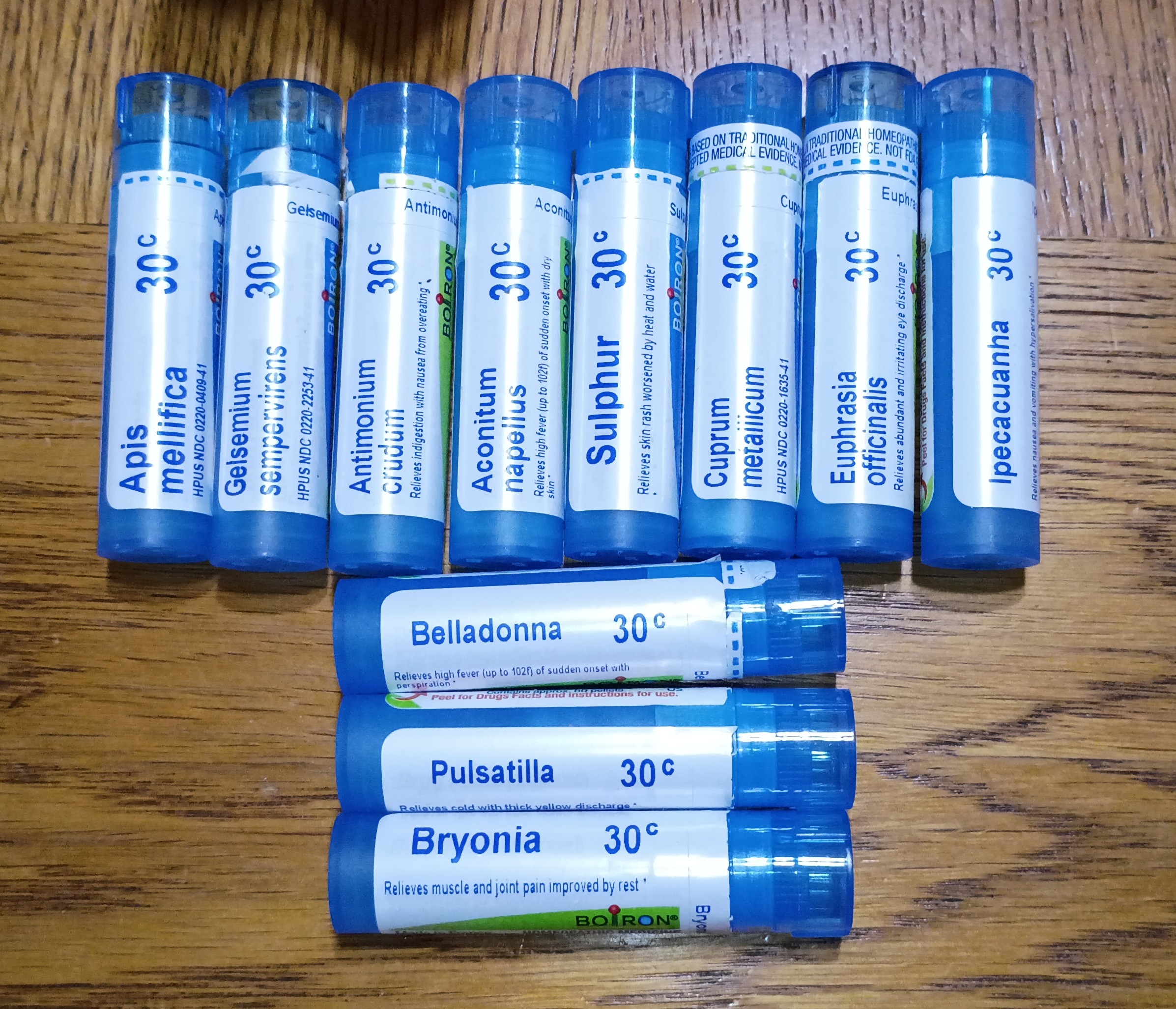
Note: Pulsatilla is the big one for measles. Also Belladonna and Bryonia. In fact, after I got home with my little list of homeopathics and looked more at my notes, I realized I'd be using these 3 more than the others, and with a large family, I went back to get extra. The lady at the store smiled when I requested them and said, "Ah, you must have been exposed to the measles. Ask how I know." I laughed.
The way I understand it, homeopathics are prescribed based on the symptoms, including the cause of the symptoms. One doesn't just treat a fever, one treats a fever that is lethargic, or a fever that is dry and restless. One doesn't treat depression, one treats depression that stems from poor nutrition, or that stems from trauma. They get very specific, and are highly effective when the right one is used. Aim small, miss small. Please note that my brief summaries are wholly inadequate. More is given in the books, especially Birch. I'm only sharing my notes for convenience-to give a broad idea. While I am uncomfortable directly quoting more details from the books here, to respect the authors, if you are dealing with measles and need this information, feel free to reach out to me on Facebook (Tamsyn Spackman), and I'd be happy to read to you what I have.
Books I'm referencing are Kate Birch's "Vaccine Free" (Birch), Dana Ullman's "Homeopathic Medicine for Children and Infants" (Ullman), Miranda Castro's "The Complete Homeopathy Handbook" (Castro), Andrew Lockie's "The Family Guide to Homeopathy" (Lockie), and Asa Hershoff's "Homeopathic Remedies".
Aconite (Monkshood) - Birch, Ullman, Lockie, Hershoff. Onset of measles. High fever. Patient is fearful and anxious. Changes that come suddenly.
Antimonium tartaricum- Birch. Helps with retarded eruptions. Also difficult respiration and loose coughs.
Apis Melifica- Birch, Ullman, Castro. Ullman describes a rash failing to fully develop before disappearing, leaving the child not feeling completely well. Birch says if the patient begins to develop meningitis, or if the rash has any swelling, or is like scarlatina, this is the remedy of choice. Birch also describes the behavior of rolling the head from side to side, or boring the had backwards into the pillow. Sudden shrill, piercing screams. Whining, restless, fussy. Urine scanty. Personal story: These were similar behaviors to what our toddler had the morning after his highest fever. My husband was drawn to Elder Flowers to help him. We also read Birch's description and found that they fit well behaviorally, even if the physical descriptions didn't match. I did some research to see which herbs were used to do the same thing Apis would do, and found... drum roll... Elder Flowers. This tea did help improve his behavior, but not completely. I went to a local mom's group on Facebook and asked if anyone had any Apis since our local shop didn't, and someone had my back. Apis was the only homeopathic we were giving him at this point, and his behavior dramatically improved. This one was the right symptom picture, and it provided the hoped for results. Most of our kids didn't really even need homeopathics, but the child who struggled the most also was the one whom we know found relief through homeopathics. I love that we found an herb and a homeopathic especially suited for his needs, and that they were able to work together. We stopped giving him Apis after he began dramatically improving, but have still been giving him Elder Flower tea.
Arsenicum- Birch. Severe measles. Weakness, restlessness, and utter exhaustion.
Notes on reducing a fever.
Belladona- Birch, Ullman, Castro, Lockie, Hershoff. Especially useful in the early stages when the fever is high.
Belladona taken every 30 minutes can help reduce a fever. I had this in my notes and wish I would have remembered when our toddler had a high fever of 104.5 accompanied by low oxygen and lethargic behavior. We were looked into natural ways to reduce a fever, but ended up using children's Tylenol and ibuprofen. We went back to the herb store the next day, and when I told the shopkeeper about his fever, she said, "Did you try belladona?" More on his story later. The following is advice I would have shared with myself that night.
Belladona is often effective at reducing a fever, but it isn't a one-and-done dosage. I don't think like a homeopath and our toddler didn't want to take any homeopathic pills, even though he usually loves them. They can be dissolved in water. Our son ended up liking them crushed when he was sick. In the Banjeri protocol, belladona is given as 6C liquid, 2 drops in a tablespoon of water every 30 minutes until the temperature is stable. In Castro's book, there is a section on fevers. On page 216 it says "Don't give a homeopathic remedy, say aconite, belladonna or chammomilla, at the first sign of a rise in temperature as this can confuse the remedy picture. Any attempt to interrupt the body's self-healing process is unwise." The average temperature for measles is 103.5.
Birch's book also has a helpful section on fevers and their importance in the healing process. From page 24,
"It is important however, to monitor fevers. The concept in homeopathy of helping to develop a curative fever must not be confused with letting a fever run wild. Left on their own, fevers can be potentially life-threatening. Adjunctive measures such as plenty of fluid intake to reduce the risk of dehydration and placing cool towels on the feet and hands can draw the heat out of the head. Cool bathing can also help. One has to watch that the cool water is not a shock to the system. Some pathological conditions will develop into seizures from the shock of cool water.
"The difference between a curative fever and the advancement of pathology is demonstrated by the general symptoms of the individual. A fever that is an aspect of the pathology will be accompanied by restlessness, pain, agitation, listlessness, and stupor with the concomitant symptoms of rapid respiration, feeble pulse, congestion, chills and nasal discharge, etc... A fever that is a curative fever after a remedy will come without these concomitant symptoms and with a level of calmness."
Bryonia- Birch, Ullman, Castro, Lockie. Especially helpful for dryness and a thirsty patient. Eruptions are delayed or suppressed.
Camphora- Birch. After effect of measles, body in a state of collapse. Sensitive skin. Body is cold.
Cuprum metallicum- Birch. Eruptions are suppressed to the nervous system. Symptoms are violent.
Dulcamara- Birch. Measles when weather changes from hot to cold.
Euphrasia officinalis- Birch, Ullman, Lockie. Sensitive to light. Acrid tears and a bland nasal discharge. Ullman mentions a cough, but only in the day.
Gelsemium sempervirens- Birch, Ullman, Hershoff. Use when the rash begins, and for inflamed eyes.
Helleborus- Birch. Child lies in a profound stupor. Rolls head and bores it in the pillow. Strikes the head. Pains causing sudden screams.
Kali bichromicum- Birch, Ullman. Like pulsatilla, but worse. From Ullman, "The child has a ropy, stringy discharge from the nose and burning, tearing eyes. Her salivary glands are noticeably swollen, and she may have stitching pains that go from the ear into the head and neck." Birch mentions scars that linger after the eruptions pass. Pustules on the cornea.
Ipecacuanha- From the Benjari protocols for measles' accompanying cold/cough.
Mallandrinum- Birch. Useful in preventing measles, relates to smallpox and vaccine effects.
Morbillinum- Birch, Lockie, Hershoff. A nosode made from measles. Useful for Homeoprophalaxis. Also can be given when koplik spots are present. Hershoff says regular remedies may not work in a vaccinated child with measles, and that Morbillinum can be the antidote to the negative, suppressive effects that the vaccine is having on the immune system.
Pulsatilla- Birch, Ullman, Castro, Lockie, Hershoff. For aid in preventing getting measles, and barring that, helps the body through the process, especially in the later stages. This one gets mentioned a lot in measles lists.
Stramonium- Birch. Rash not properly developed. Tosses and cries as if frightened in sleep. Expressions of terror on the face. Loss of vision, asks for more light.
Veratrum album- Birch. "A picture of collapse with extreme coldness, blueness, and weakness... eyes surrounded by dark rings.... Despair of salvation."
Sulpher- Ullman, Lockie, Hershoff. Rash slow to clear, turns purple.
Zinc- Birch. "This remedy corresponds to the poisoning of the nerves and the brain. Poisoning from suppressed eruptions or discharges."
Homeopathic Books to Consider
For our purposes addressing an acute illness like measles, Kate BIrch's book "Vaccine Free" was the most useful because it covered the illness specifically in such detail. However, the other books in our personal library were helpful too, and they have a different purpose- they were designed to help a family learn homeopathy for any number of ailments and make it part of your daily life. While I have only used these books for reference thus-far, here is what you can expect from these other homeopathic books. Spoiler alert- my favorite is Miranda Castros!
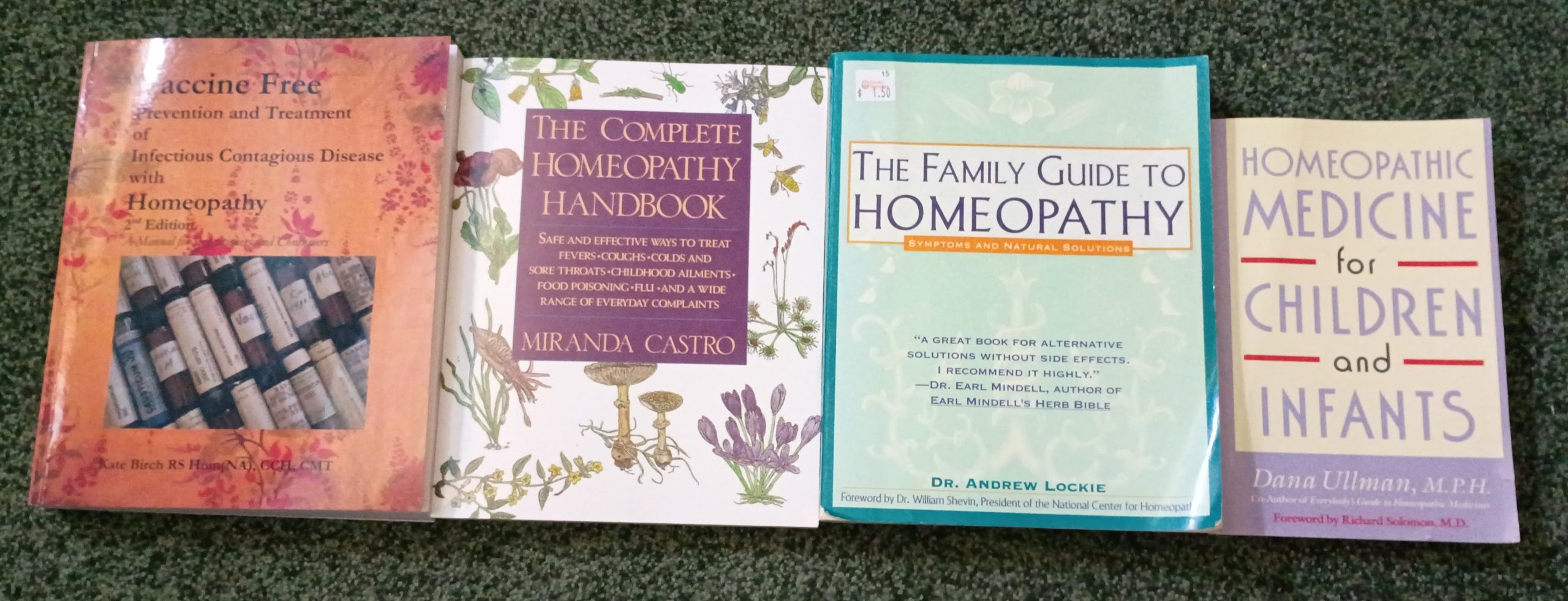
Dana Ullman, Homeopathic Medicine for Children and Infants- This book is 258 pages, and has two pages dedicated to measles, 112-113. The intro is thus: "Homeopathic medicines are often effective in treating measles, though medical attention should also be sought due to the possibility of complications from this disease." The book has 5 parts and two appendixes and some resources. The 5 parts are "Why Homeopathy Makes Sense", "How to Use Homeopathic Medicines", "Common Ailments of Children", "Essential Homeopathic Medicines", and the shortest chapter, "Commercial Homeopathic Medicines". The ailments list is long and includes big things like measles, and relatively small things like splinters.
I particularly like the 4th part, "Essential Homeopathic Medicines". There are several homeopathic medicines that are described in great detail. The section for "Pulsatilla", for example, is four pages long, though some are only two. Again, homeopathic medicines are most effective when the medicine matches the symptoms. The medicines all list general characteristics. It describes not the characteristics of the medicine, but the characteristics of the person who would need it. Things like being moody and clingy, or having difficulty making decisions come into play.
Andrew Lockie, The Family Guide to Homeopathy- This book is 463 pages and has nearly one page on measles, page 374. Pages have two columns and a finer print. Measles is described overall, followed by a description of the pre-rash stage and remedies for it, and the rash stage with remedies. It is fairly short, but I do like that it does give a dosage recommendation.
For the pre-rash stage: "To be given every 2 hours for up to 10 doses: *Cold symptoms and high fever, Aconite 30c or Belladonna 30c. *Symptoms as for Aconite or Belladonna, but eyes red and watering, and eyelids swollen, Euphrasia 6. *Child feverish but not thirsty, very tearful and miserable, thick green mucus, light hurts eyes, dry cough at night, lots of phlegm coughed up in morning, upset stomach or diarrhea, Pulsatilla 6."
For the rash stage: "Specific Remedies. To be given every 4 hours for up to 10 doses: Rash slow to appear, child irritable, has high temperature and is very thirsty, dry hacking cough, headache made worse by coughing, Bryonia 30c. Rash slow to clear, spots turn purplish, Sulpher 6c."
Lockie's book has 6 parts and useful resources. The parts are "What is Homeopathy?", "Prevention is better than cure", "Homeopathic Remedies" (Two parts, a general remedy finder, and homeopathic remedies and their sources), "Ailments and Diseases", and "Nutritional Supplements and Special Diets". I like the general remedy finder, which lists all sorts of symptoms, such as "Wanting to drink large amounts", and a list of homeopathics that may be indicated. The primary appendix is "Sixty remedy pictures", and lists homeopathic medicines themselves, similar to Ullman's "General Characteristics". It has a nice reference guide for general nutrition too. For example, under Vitamin A (chosen by me because it's so important for measles), it says why Vitamin A is important, ie, for functioning of the eyes. It says it is "found in organ meats, cheese, eggs, butter, margarine, fish oils, green, yellow, and orange vegetables, e.g., carrots, cabbage, and spinach." It gives recommended dosage amounts, its side effects such as nausea if one takes too much, and cautions about taking medicine when pregnant.
Miranda Castro, The Complete Homeopathy Handbook- This book is 256 pages, again with two columns and finer print. It has a couple of paragraphs dedicated to measles within the childhood illness section, plus a bonus case study with another page plus an example repertorising chart. On page 209, there is a basic description of measles. We are advised not to be tempted to suppress the fever, even if the temperature is relatively high, and referred to a section on fevers. She says "Complications thought to be caused by suppression include ear infections, respiratory problems, pneumonia and encephalitis (inflammation of the brain), and children need careful nursing to reduce the likelihood of these." She also says TV is okay if it doesn't hurt their eyes, but to keep them out of bright lights. Seek help in cases of an infant under 6 months getting measles, there is a prolonged cough, or if the measles is accompanied by severe earache.
Castro's book is a bit different than the others because this section on measles does not suggest a single homeopathic medicine here. Instead, the book later walks the reader through the process of determining the appropriate remedies themselves. In homeopathy, an individual medicine is called a remedy. In the introduction, she explains that many homeopathic remedy books try to simplify the process of finding a remedy in order to make homeopathy more accessible to the lay person. This has resulted in a "hit-or-miss affair" where often the remedies people find are disappointing, which hasn't been very good for the reputation of this healing art. She decided to instead write a book that would walk us through the same processes that a professional would use to give a prescription. Which I think is awesome!
The four parts in her book are, Part I: History, Principles and Prescribing", "Part II: The Materia Medicas and Repertories", "Part III: Prescribing Guidelines and Follow-through", and "Part IV: The Appendices". 34 pages are dedicated to listing symptoms such as "Bed-wetting", with a few remedies indicated, then lists a few more specific examples, such as "child sleeps too deeply to wake: Bell." or that it is caused by a back injury.
Then on page 230, there is a blank chart you can photocopy that gives a space to write in the symptoms, and then check the boxes of the remedies that are applicable, with that section as a guide. A pattern will probably emerge that will make it much easier to find the specific remedy that matches the patients' needs.
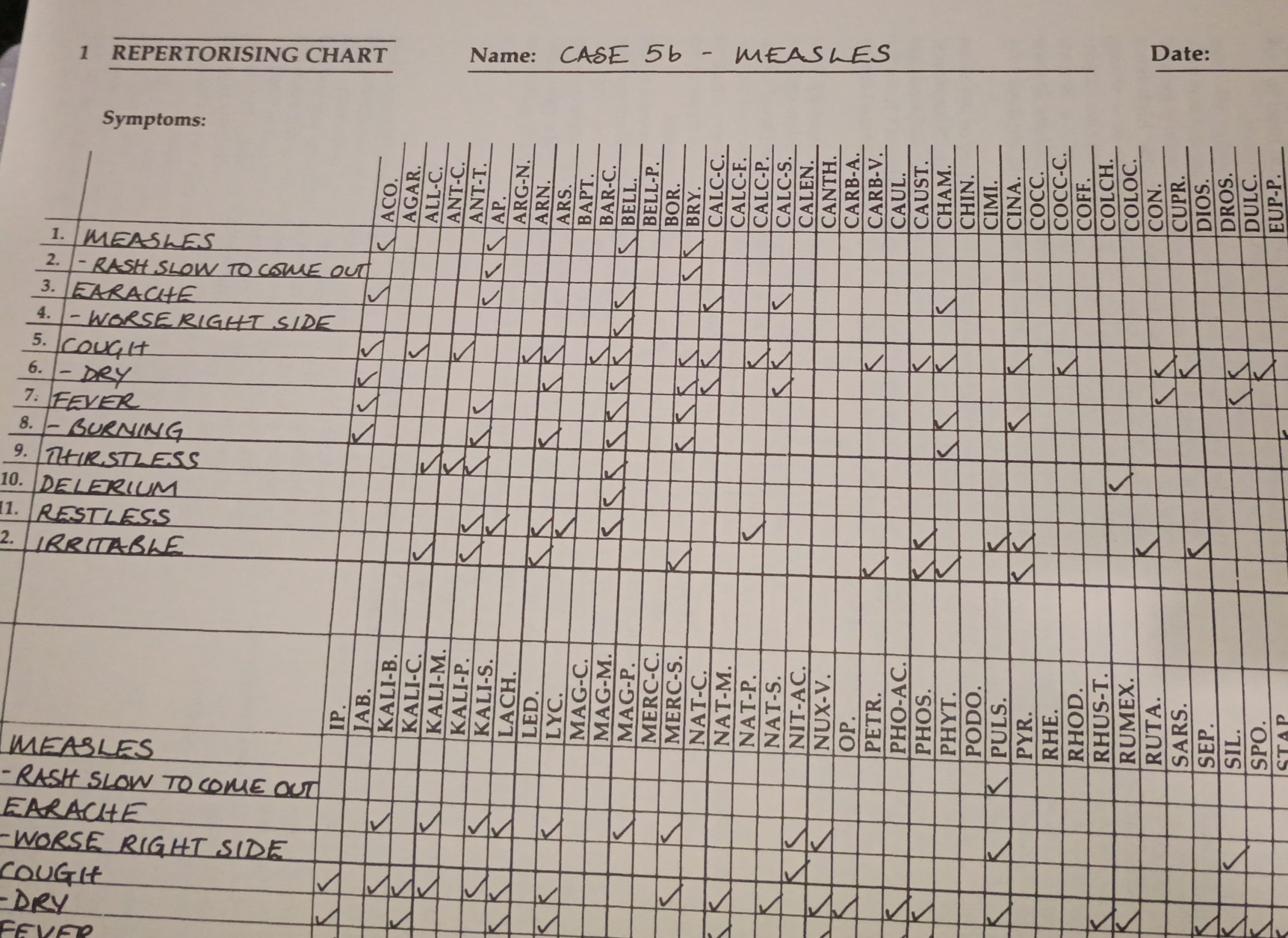
There are 10 sample studies, and fortunately for our purposes, one of them is measles. In the first example, a child with measles does not need any remedy at all. The classic symptoms are there. A fever of 103 in the acute phase, an itchy rash. He's miserable, but drinks plenty and sleeps often. He is reasonably happy and makes a full recovery. He is coping well and the final result is a child with a healthier and stronger constitution "as a result of coping with the illness without interference."
The second example is a boy who is having complications. He's got koplik spots, but the rash hasn't come out yet. He has a higher fever of 104, and is delirious. He's very hot to the touch. He's distressed and doesn't want to eat or drink. A few other symptoms are listed, as shown in the picture. Apis, Belladonna, Bryonia, Pulsatilla, and Sulpher are the ones most indicated- incidently ones we have seen other books list. But she rules most of them out one by one. A Bryonia patient lies still like a log, and our patient is restless. Not Bryonia. In the end, Apis and Belladonna are the two that most closely match. There is a Materia Medica section in the book where you can go and read up on the two and get a better picture. Apis fits better, so Apis is prescribed. One remedy. You give it frequently (2 hours) to see if it is the correct remedy. If there are no improvements after six doses, change to Belladonna. She then explains that when the cough becomes more predominant, changing to Pulsatilla may be needed.
This surprised me because I don't think like a homeopath. As a budding herbalist, I combine herbs all the time. Formulas are wonderful because a number of similar herbs can be combined to strengthen its effectiveness, in part because you have a better chance of getting the right herb when a number are mixed together. However, herbs can treat very specific needs just like homeopathics can, and when the fit is right, they too can yield dramatic results. Homeopathics are rarely combined, I'm learning, so the more accurate the prescription is, the better the results will be. It would seem that the time to be learning is not during the peak of our children's illness! I missed the boat on that one.
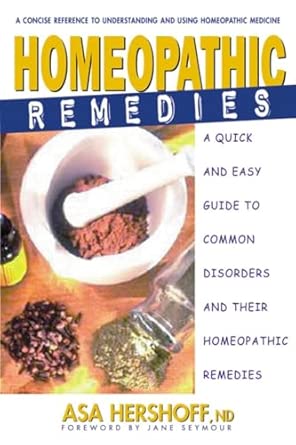
Asa Hershoff- Homeopathic Remedies- I am giving this one an honorable mention because someone has snapped a picture of 214 about measles and shared it, and it has been widely circulated. I asked in a Facebook group if anyone knew where it came from, and it was this book. I've ordered it and will likely update this section later. This book adds this helpful advice to our "good to know" repertoire: "For atypical measles syndrome, or any measles case in a vaccinated child, regular remedies may not work, and a dose of Morbillinum 30c or 200c is often needed. This remedy, made from measles virus, antidotes the negative, suppressive effects that the vaccine is having on the immune system". There have been a number of vaccinated individuals that have been getting the measles during our Utah outbreak. It could have helped me! I wish I could have had a regular case of the measles instead of the chronic sickness I've been dealing with.
Thoughts on Homeoprophylaxis
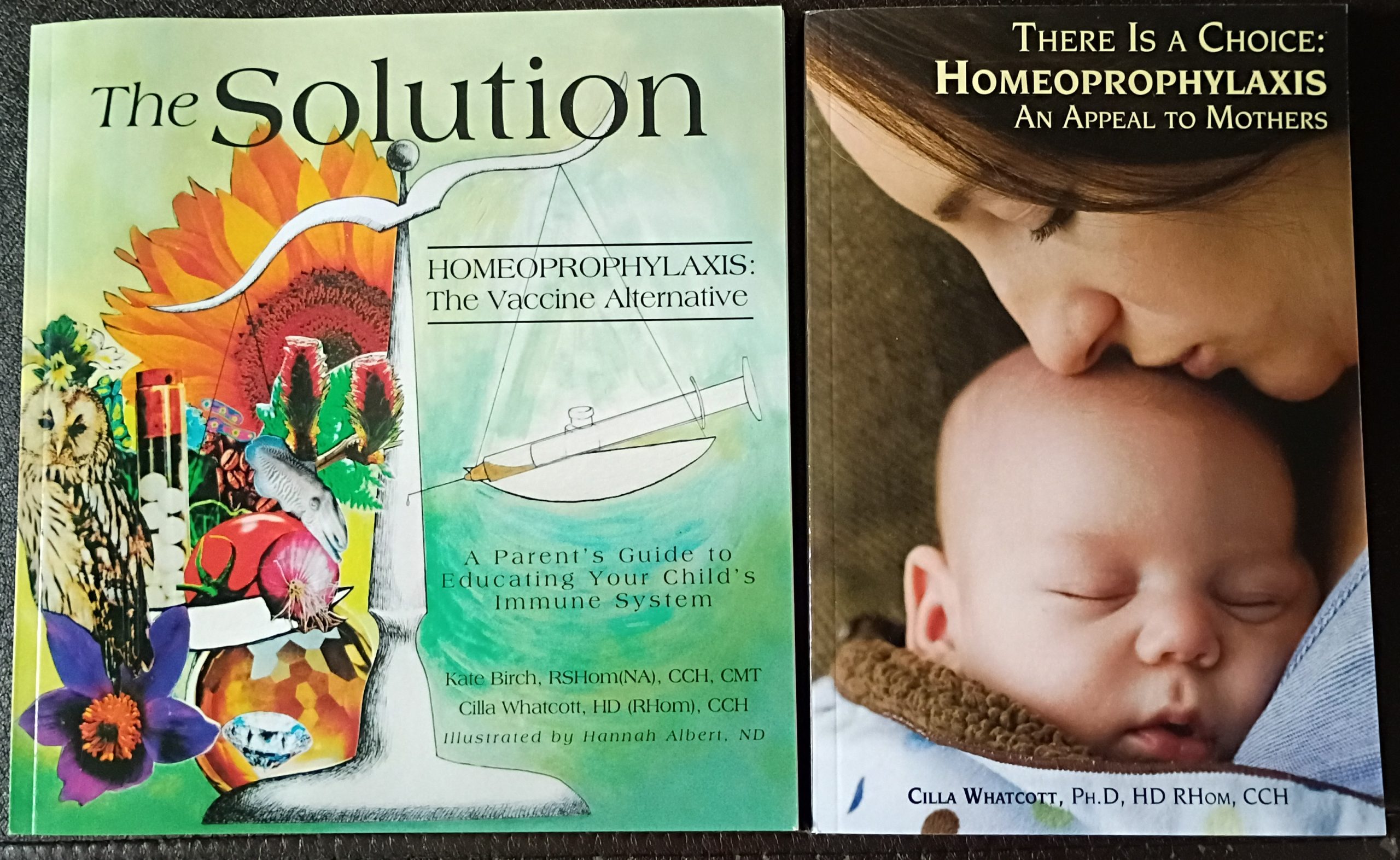
A book I ordered during the research process but did not use during our measles experience is "The Solution, Homeoprophylaxis: The Vaccine Alternative, A parent's Guide to Educating your Child's Immune System", by Kate Birch and Cilla Whatcott, illustrated by Hannah Albert. This is a homeopathic alternative to vaccines that has had great results for building immunity. I also bought "There is a Choice: Homeoprophylaxis" By Cilla Whatcott and a forward by Dr. Isaac Golden, who has also written books on the subject. I am very intrigued by this method since there are a lot of people in the natural communities singing its praises.
I say alternative, but must be careful here because state and national health agencies do not recognize homeoprophylaxis as an alternative to vaccines. Health Canada states that there is no substitution. Going through a homeoprophylaxis treatment will not be recognized by these agencies as a substitute for vaccines when it comes to enrollment in schools and other vaccine mandates.
It is only an alternative in that it is a way to provide our children with some protection against childhood illnesses. I believe in medical freedom, and I exercise that freedom by opting out of vaccinations. There are many who are not going to get the vaccines, whether for medical, philosophical, or religious reasons. Homeoprophylaxis has been studied and has proven to be effective enough that further studies are certainly warranted. Little Mountain Homeopathy has a webpage that goes into the history of homeoprophylaxis. It shares various case studies that demonstrate their effectiveness to be in the 90%-97% range, similar to the vaccines.
Also, while studies proving that this treatment will produce antibody titers need to be done, there is antidoctal evidence for the same. I personally know someone whose children have not had any vaccines, but they have had homeoprphylaxis treatment. They tested positive for having antibodies for measles without having had the illness. This is powerful, and was very exciting for me to hear! While local schools, the military, and hospitals may not recognize homeoprophylaxis as an alternative to vaccines, they DO recognize proven immunity. They require proof through tests for titers. In this round-about way, it may still provide a path for an actual alternative to vaccines in places that don't offer exemptions. "Hey, I know! Lets trick them into thinking that we have immunity by going behind their backs and gaining immunity. They'll never suspect!"
I do think that natural immunity through the illness will still give stronger protection in the future, and helps to build the immune system in ways that homeoprophylaxis likely falls short. But I say this as someone who hasn't finished reading the books, has no experience with it, and has only done preliminary research in the form of the resources I've shared. But I'm definitely taking it seriously. I know from experience that the chances that our children will be exposed to most childhood illnesses are slim. We've done chicken pox and measles. I am concerned about them running against the others when they are adults and the risks are higher. I'm grateful to know that there is a holistic way I can pursue that will offer them some protection.
Final Thoughts
Well, for how little I have used homeopathy, in the end I had more to say about it than I thought I would! I have learned so much, and wish I could impart that knowledge on my past self before our adventure. But I also know that there is still an outbreak happening, and I was motivated to keep learning and share the knowledge that these books and resources impart, to the best of my abilities. I will definitely be learning more and using homeopathics in our family moving forward. My heart is more with herbalism, and we're studying it too. The two can work marvelously together, as they each have their strengths.