
Again- Disclaimer: This post is not medical advice, but my own thoughts and feelings. I am not a medical professional, just a mom.
I'm writing this section as an unplanned bonus. I hope it will be useful to all, but it is written from the perspective of a so-called "anti-vaxxer". This is boots-on-the-ground thoughts in our "in between" stage. One kid has recovered and the others are just starting to get sick. Much of the anxiety I have had has been over wondering what I'll do if they have to go to the hospital. For many, it's more cut and dry than it is for someone who has made decisions that are counter to official health care recommendations, and worse, someone who has seen a LOT of hate on social media. There are people who hope the anti-vaxxer's kids die; people who think that the parents who don't vaccinate ought to be in prison. Combine that with a healthy distrust of the medical system born from personal experience, and the idea of taking one's children to the hospital can be very frightening.
Naturally, if they need to go, we will take them. I still am baffled by a woman who thought I was crazy for choosing home births. When my son broke his femur, she commented that I really ought to take him in to the hospital. What kind of a monster did she take me for? Of course we took him in, past tense. If I needed a C-section, of course I would transfer from a home birth. And if there are complications with the measles, we would take them in for that too. But what would those complications look like? When would I take them in? And what has my experience with the medical establishment been so far? I'll start there.
Preventative care for the Immune Compromised
My first interaction with the Tri-County Health Department came because I was seeking an immunoglobulin for my infant. I initially called the health department instant care to ask about getting one and I talked to several people who didn't know what I was talking about, so they forwarded me on. Ultimately I did end up with a very kind woman from this department. These immunoglobulins are usually only effective if given within 6 days of exposure (4 days before the rash), and they are hard to make and somewhat rare, so there were steps we had to take to prove there is a need. In our case, they would have preferred to have a positive test result for my daughter, since she was the source of his exposure. I didn't have that in hand, although I DID have a kid who obviously has the measles based on the visuals- the rash and the koplik spots. Although the department still wanted me to take her in to get tested, she was ultimately able to pull some strings for me based on a phone call to the school to confirm that she had been in choir where there was a confirmed case.
Immunoglobulins have a good track record for helping the immune compromised avoid illnesses. I really wish there was more of an effort to give babies that are in the 6-12 month range and have an immediate risk of getting measles an immunoglobulin, rather than push a vaccine that is normally given at 12 months of age. For babies in the 0-6 month range, they are the best preventative option, officially. I don't have natural immunity to measles, and even though I did get the shots as a kid, if we assume I am still immune, I would have given my baby some protection for the 0-3 month age (thankfully, this is where he fits). A naturally immune mother provides stronger protection (breastfeeding or not) through at least 6 months of age, after which it begins to drop. An immunoglobulin is a great option if you can get it. They are made from the plasma of thousands of donors who have immunity to the measles and other things, whether natural or vaccine induced. A child who has received an immunoglobulin should not receive any vaccines for 6 months.
"We're not the bad guys."
I was very grateful to the woman from the health department who knew the system and pulled the strings we needed for my baby's treatment. I told her she was a hero, and she laughed a little and told me thank you, it's nice to hear that since so often they are treated like they are the bad guys. Between that phone call and a follow-up yesterday where she asked some questions about my daughter and I had the opportunity to ask my own, I wish to confirm it. They really aren't the bad guys. We may have different opinions about health choices, especially regarding vaccines, but they really do want to help. They aren't here to judge, as a whole. Those who don't vaccinate have certainly met a lot of health professionals who DO judge, we see it when they bite their tongues (or not!), but at least here in Utah, it IS legal for us to choose not to, and 5% of the population are in that boat. This isn't California or West Virginia. There's a reason why we moved back to Utah.
We may be a minority, but 5% of the population is a lot of people. We are people that the health department is working with every day. She expressed to me that they are hoping to do an outreach to the community to help soften the divide between the vaccinated and the unvaccinated. They are there to help, not to judge. What they really don't want is for people who need medical help to stay away until it is too late. She also gave me some helpful guidelines.
When *I* would take my children in
I told her that I have a finger pulse oximeter, and she said that's very good. While 100% oxygen is the ideal baseline, as long as they are above 90%, we are probably okay treating them at home. It's when they drop below 90% that it gets dangerous, and they would need to take oxygen. This is the same thing my friend who recommended that I buy the oximeter told me. Furthermore, when my 7th child was born purple and needed oxygen his first night, he wore an oximeter all night and we gave him oxygen ourselves to keep his levels healthy until he was stabilized, so I have some personal experience with it. An oximeter is a great thing to have in the home.
The other thing she told me to watch for is if our little ones stomachs rise and fall as they breathe, more than usual. They will usually breathe more with their rib cages, and tend to switch as they become more and more congested.
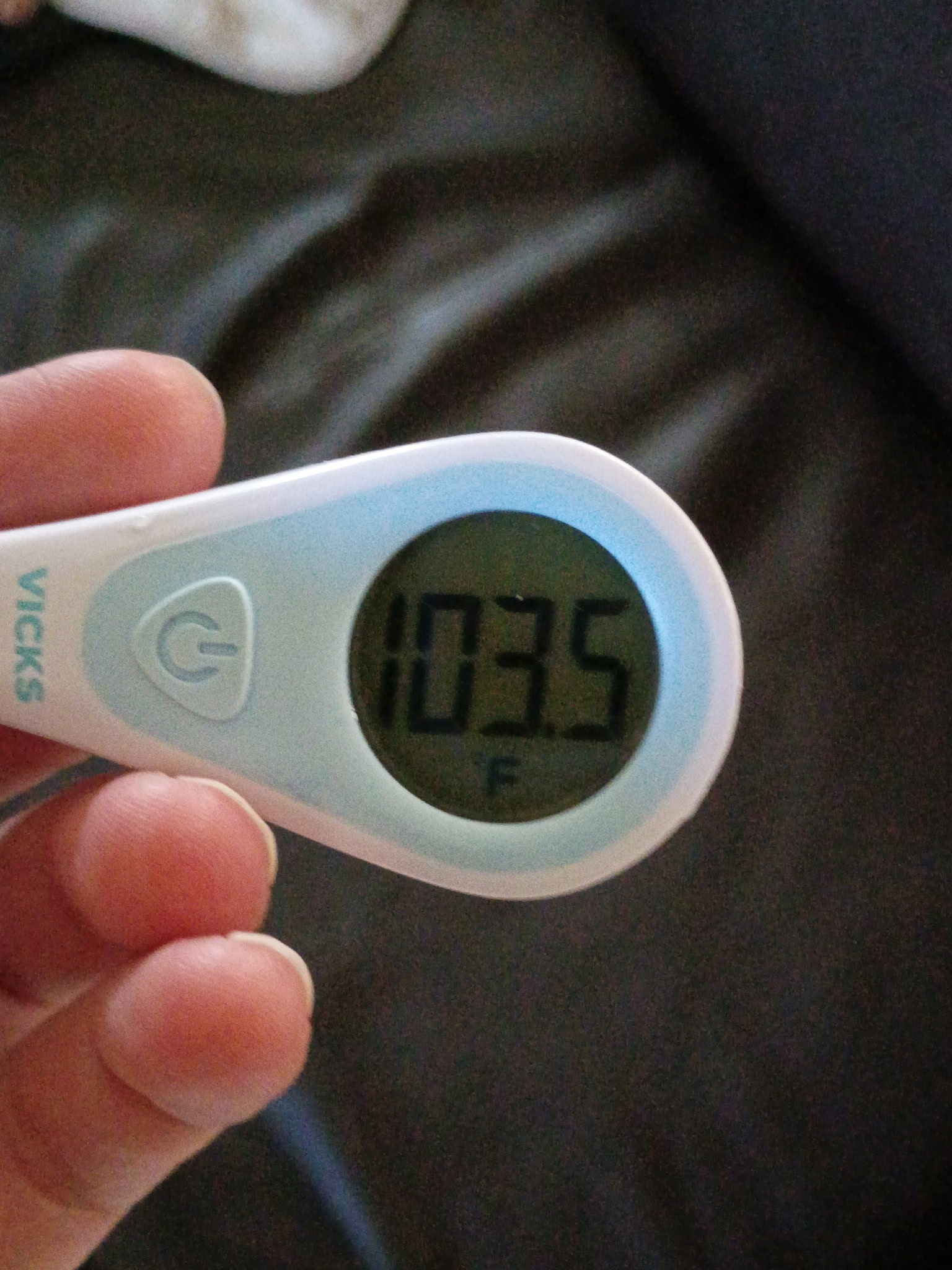
A very high fever would be another reason to be concerned. Typical measles fevers are in the 103-104 range at their peak. In the Texas outbreak, they were seeing fevers as high as 106. Dr. Christopher's book suggests that a moist fever can reach these higher temperatures and still be safe, it is the dry fevers that are dangerous. Those higher temperatures are not as concerning as the behaviors that often come with it. Are they lethargic? Unresponsive? Do their eyes act strange, not focusing, or rolling? I would take my kids in if they started acting this way and I wasn't able to bring them back quickly with natural remedies. High fevers are associated with febrile seizures. Most of the time febrile seizures, while scary to witness, are relatively harmless. However, they are associated with some of the other complications associated with measles that we want to avoid.
Cayenne tinctures taken with a little juice will open things up quickly and bring a person back to the living. I also added to my last post that a catnip tea enema can quickly and safely bring down a fever, helping with dehydration while still inducing the child to sweat, even in their sleep. These are my at-home try-first emergency remedies I intend to use before we go in to the hospital, but if they don't work, we'll be going in.
Nearly all of the hospitalizations for measles are related to respiratory complications, especially pneumonia. Ear infections are another concern.
Dr. Bartlett and the Texas Outbreak
I am very grateful to my friend who recommended Deltree's interview with Dr. Bartlett on the Highwire. (Skip to 57:03 for this topic). I have watched several of his presentations on the measles, but I might have missed this one without her advice. It ended up containing information that has given me a lot of peace concerning what my course of action will be if we DO need to seek medical help. They had some severe cases out there and were still able to turn things around, dramatically, with modern medicine.
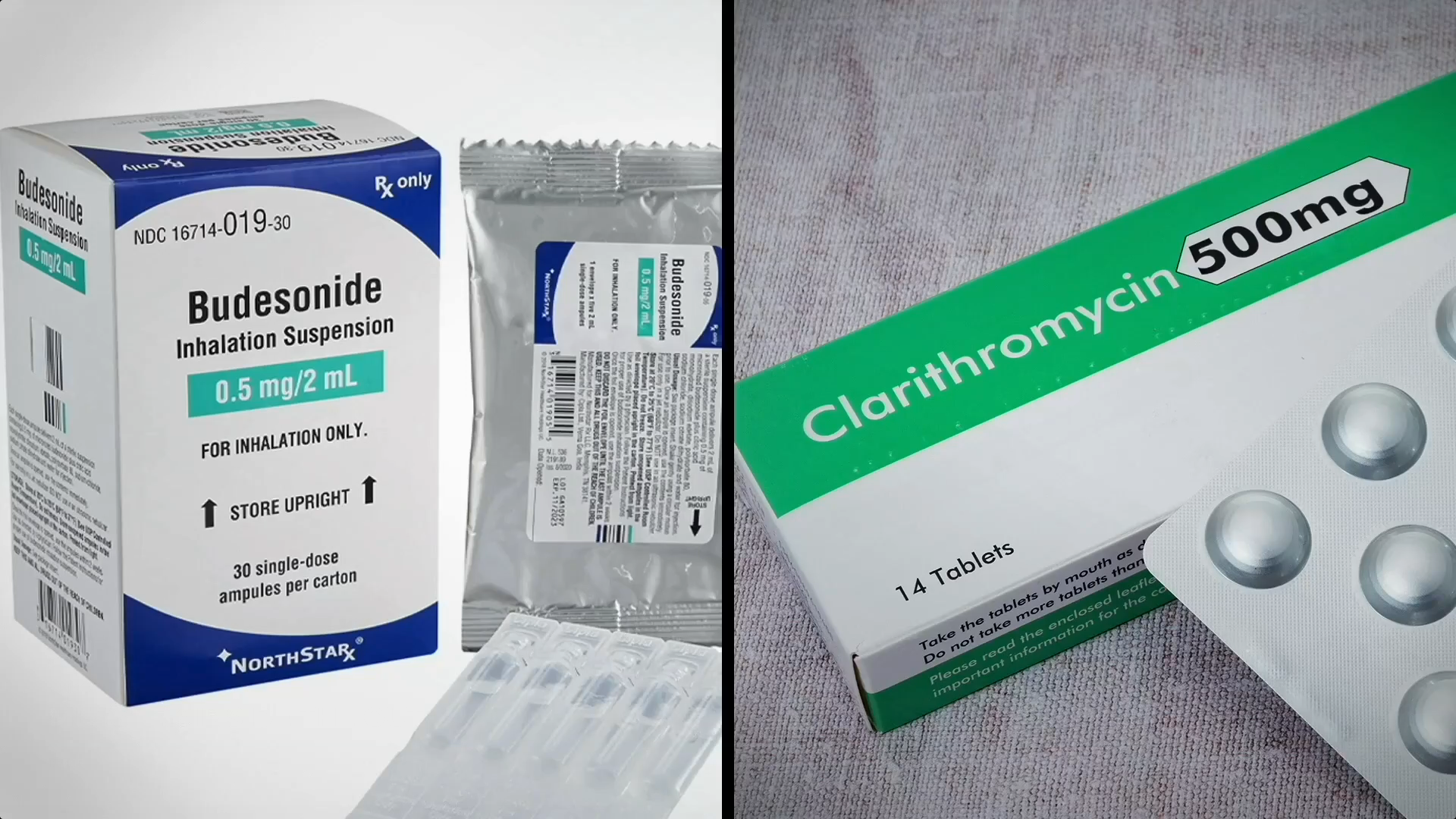
Measles is complicated, and a lot of the strains people are facing are not what the text books have taught us to expect. The measles virus is mutating. We were fortunate enough to deal with wild measles, but the Texas outbreak of 2025 was the vaccine strain. Dr. Bartlett has been in the medical field for more than 30 years, and hadn't seen measles until it swept through his neighborhood. He saw a lot of cases where children absolutely needed medical intervention, and it saved their lives. I highly recommend watching this interview to learn about how incredibly life saving and effective Budesomide has been for measles patients, paired with the antibiotic clarithromycin. (Image below is a screenshot from the interview.)
From that interview, I also found my way to Budesonideworks.com, which sheds more light on Dr. Bartlett's protocols for measles. Here you will also find at-home care suggestions for the measles that will feel a bit more mainstream to the parents who may be uncomfortable mincing garlic and brewing teas. Or maybe those who want both! If we have to go to the hospital, we have left the onion poultice and herbal tinctures territory.
Furthermore, Two Texas children did NOT die of measles.
There are prescription medications that are only available through the medical establishment, and sometimes they are needed to save a life. Learning about Dr. Bartlett's experience treating so many serious measles patients and seeing such remarkable outcomes has done a lot to alleviate my own anxieties and fears regarding taking my kids in for medical help. My friend recommended https://myfreedoctor.com/, which is a place some people have been able to get prescriptions for these medications. Leastwise, it is affordable care for those who struggle financially- ER visits are so expensive!
I honestly don't know how the local hospital is treating measles patients, though I have seen statistics showing that 10% of the known cases here do end up getting admitted to the hospital. But I do know that this is a treatment that works, and I can be an advocate for my kids, even in unfamiliar territory. Having this plan has given me a lot of peace.
Closing thoughts
People in the natural community like to point to things like the Brady Bunch episode "Is there a Doctor in the House?". Or perhaps Brunhoff's childrens book, "Barbar and the Doctor". They do indeed demonstrate that when measles was wide-spread, there was not so much fear surrounding the illness. I think that social media-induced fear has indeed been overblown, or at least misplaced. On the other hand, both of the titles contain the word "Doctor". Mrs. Brady called the doctor when her kids got sick. That was normal back then too. We are certainly attacking this as best we can with natural remedies and hoping for the best. The local health department also wants our children to have a healthy outcome. It's a common goal at the end of the day. We've got a back-up plan if things get too big for us to handle on our own. Don't be afraid.
Edit to add: We got billed $600 just for my teenager's measles test. So maybe a healthy fear of the bills is actually warranted. It's frustrating because she needed that test to go back to school before the mandatory exclusion of the unvaccinated was over to prove she was now immune, and we also needed to do it to prove my baby had been exposed to get the immunoglobulin. She had red spots and koplik spots, but they wouldn't diagnose her based on the clear evidence, we were required to formally test her. I wrote this post with optimism, but getting this bill has left me very frustrated with the process. At the very least, it would have been nice to know that the test would cost this much before we agreed to do it. It feels like highway robbery. I'm glad I petitioned to skip it for the other six kids! They are purely homeschooled, and I convinced them to let me self-report for their statistics.
In Utah, parents may be interested in Direct Care Pediatrics. Dr. Hubbard offers online care, and we signed up for his text membership. He was very helpful in answering my questions about immunoglobulins. He also could have sent a measles test for us via mail, which probably would have been the better choice for us, but I caved in my urgency to get treatment for our baby. I could have told the health department that we would do our testing this way and avoided the inflated prices of testing at the Urgent Care- I even knew he offered this service. They just needed her tested and told me where to do it locally. I didn't think the local test would be so expensive! Live and learn- or better yet- learn from me! We will be doing our future check-ups with him when we are in the city, and I'm grateful for his online/text service.
Another edit: Readers may be interested in Dr. Pierre Kory's clinic and their virtual care for measles. They offer consultations and prescriptions for antivirals to help prevent measles, as well as care during the acute phase. I think this may be good choice for anyone seeking allopathic medicine with a doctor familiar with options outside of the one-size-fits-all vaccine approach. Prices are listed upfront. I have a lot of respect for Dr. Kory and his work during the pandemic. He is the author of "The War on Ivermectin: The Medicine that Saved Millions and Could Have Ended the Pandemic"