
Disclaimer: I am NOT a doctor. I'm also not a master herbalist, a homeopathic practitioner, nor do I have any formal training in any of the healing arts. I'm just a mom sharing what I found. This post does not contain medical advice and is for informational purposes only. I'm likely wrong about some things and right about some others- just sharing notes and my opinions. Herbs are powerful and may interact in negative ways with some medications, so I am obligated to recommend asking your professional care provider before taking any herbal remedies.
Useful Herbs for Measles
Herbalism is the primary approach that we used to tackle the measles. When we were new parents, my husband and I discussed childhood illnesses and how we would deal with them. We decided that education would be the best way to alleviate fear, and in the end, I decided to take the Family Herbalist Course from the School of Natural Healing. Not an affiliate link. That course, and its primary textbook "Herbal Home Health Care" (henceforth referenced on this page as HHHC), helped us with chicken pox (twice!), helping broken bones heal, and I was confident that it would get us through the measles as well, and it did! I ended up referring not only to the section for measles, but also croup, bronchitis, pneumonia, ear infections, and the common cold. While this may sound alarming, we were primarily addressing symptoms and doing preventative care. Nip it in the bud before it becomes a problem.
Dr Christopher's "Herbal Home Health Care" is much cheaper on their website than it is on Amazon in book form, but has a kindle version. Most of the herbal remedies came from him. Christopher's book is fantastic in that it gives you clear courses of action. So many herbal books are primarily reference books that will say things like "ginger is for an upset stomach" but leave the hows-its a mystery. This book tells you WHAT TO DO, and has been so incredibly useful as a mother for the natural pediatric care of my children. I have thousands of books, but if I could only keep a handful, this one would make the cut. This is a page they published that is similar to what's in the book, though not as detailed.
Also, "The Little Herb Encyclopedia" by Jack Ritchason N.D. This book was in my personal library and is such a handy reference. I bought the herbs Christopher recommended, then realized I didn't know/remember much about them. Understanding the herbs I'm actively using is great, and this one expands beyond what it's useful for and gives a little history of their uses. It's not illustrated, not one of my prettier herb books, but as an adult wanting quick references for so many herbs during my crash course into naturally treating measles, I reached for it often and first.
My original post gave different categories based on what we bought, with bulk herbs, capsules, tinctures and oils. I decided this wouldn't be the most useful to the reader, especially since I was mostly just buying the herbs I wanted in whatever form it was available in at the local herb shop. Capsules and tinctures can be dropped into teas and put into baths. Some of these herbs might be found in the tea section at the regular grocery store. I initially overlooked mentioning whole foods that are also herbs, such as garlic, ginger and onions. Catnip and Red Raspberry Leaf were the tonic for drinking, baths, and enemas, so we used a lot of them. Garlic is a potent antiviral and was especially useful for us.
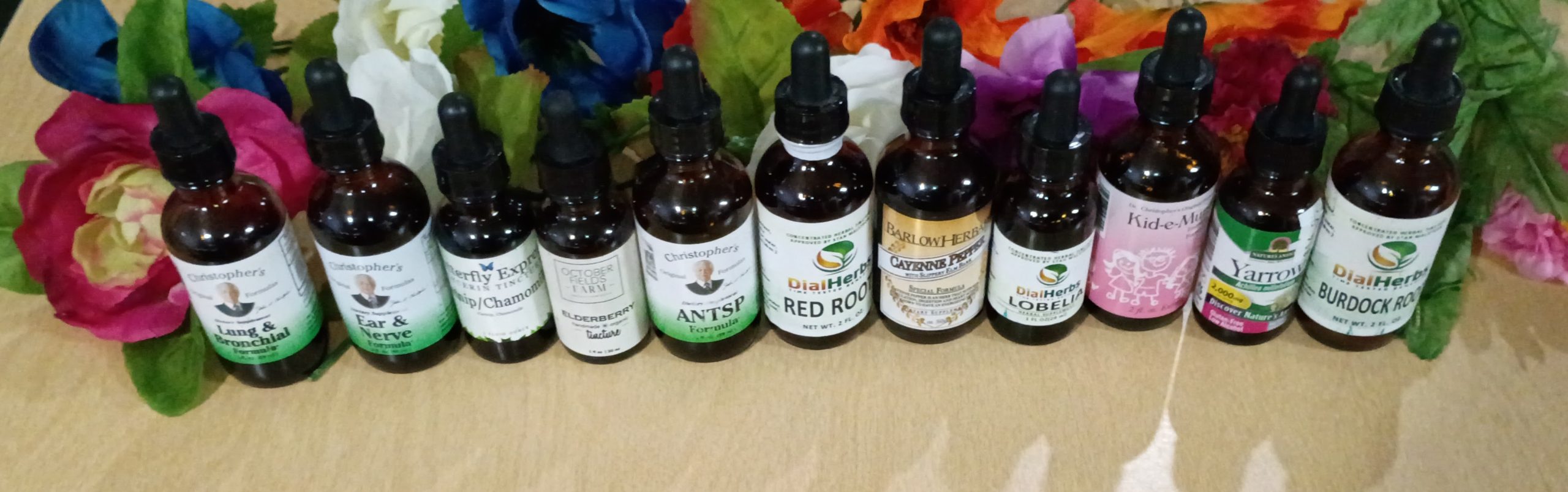
Tinctures are absorbed by the body faster than whole herbs and are often more convenient. If alcohol is the base, you can add it to a small drink of water so it doesn't burn the tongue. Or you can put it under the tongue and then follow it with a chaser, which is more effective but requires tougher kids. Take it yourself first so you can judge what the experience will be like- if you're a tough parent! I like a chaser! Glycerine ones are often available for children, though they tend to be a bit more expensive.
In the end we spent around $1,000 on supplements. That's a lot. We got a lot of herbs with plenty of leftovers for our future use. I don't think we needed everything, and the purpose of my post isn't to tell anyone else to go out and spend that much. I am highlighting the ones that were most useful to us. We had 8 cases of measles in our home in the end, which is also a lot! I was highly motivated to keep them all healthy enough to not need to go to the emergency room, and we were successful in our goal. Aside from the primary concern for their health, how much would we have paid if only one of them had to walk in that door? Fortunately we were dealing with a wild strain of the measles and it wasn't any worse than the flu.
I also wanted them to be as comfortable as possible, and many of these herbs provided relief for their symptoms. They soothed. They healed. They brought comfort to emotional symptoms. And best of all, they taught all of us and spurred an deeper interest in herbology. Our faith in herbs was well-placed and we experienced little miracles.
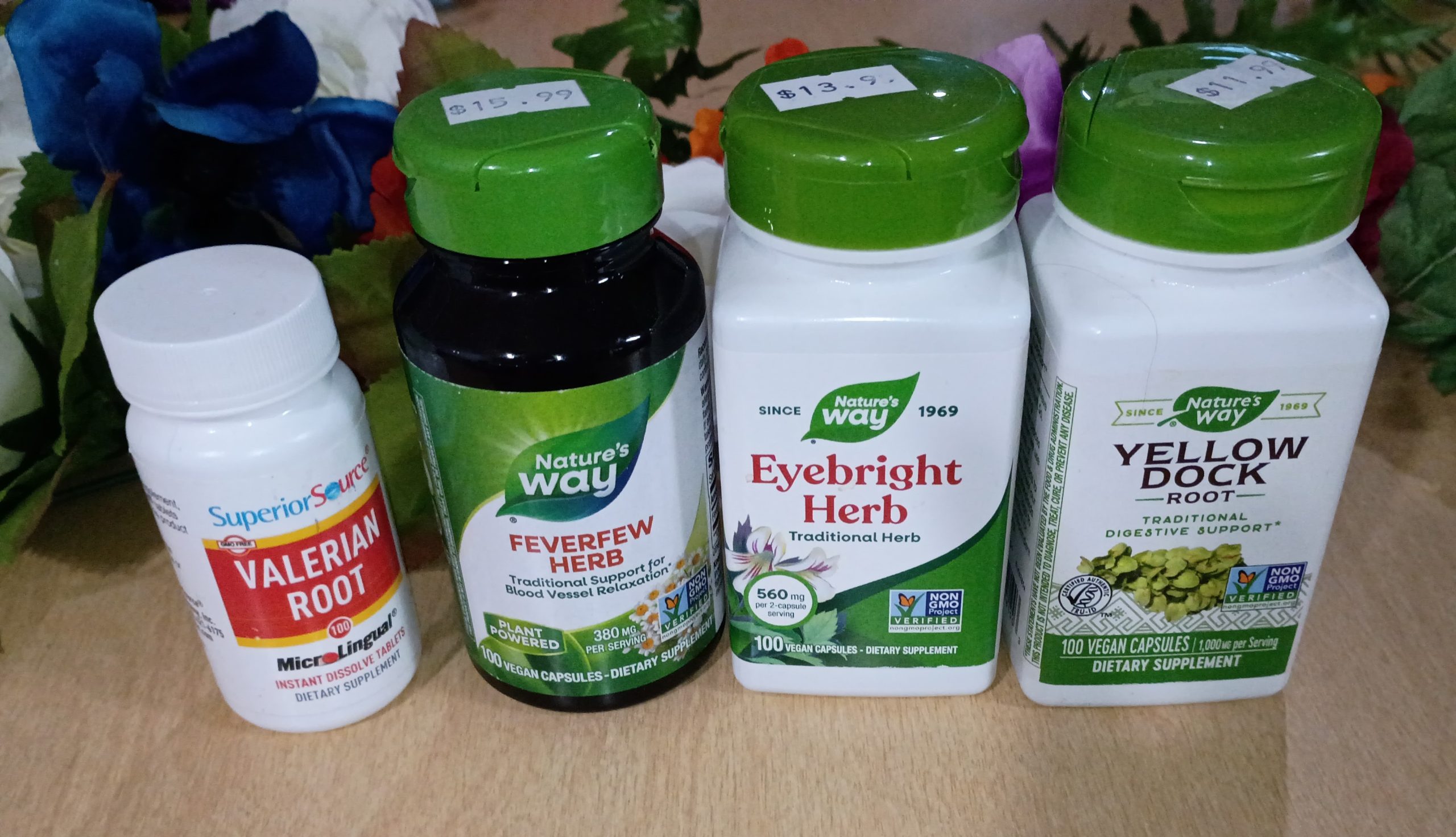
Without further adieu, here's a little alphabetical glossary of the herbs we used. For my own convenience, tincture formulas and essential oils are listed here as well. We were homeschooling and making floral crowns for May Day when I wanted pictures, so I went with it because they're pretty.
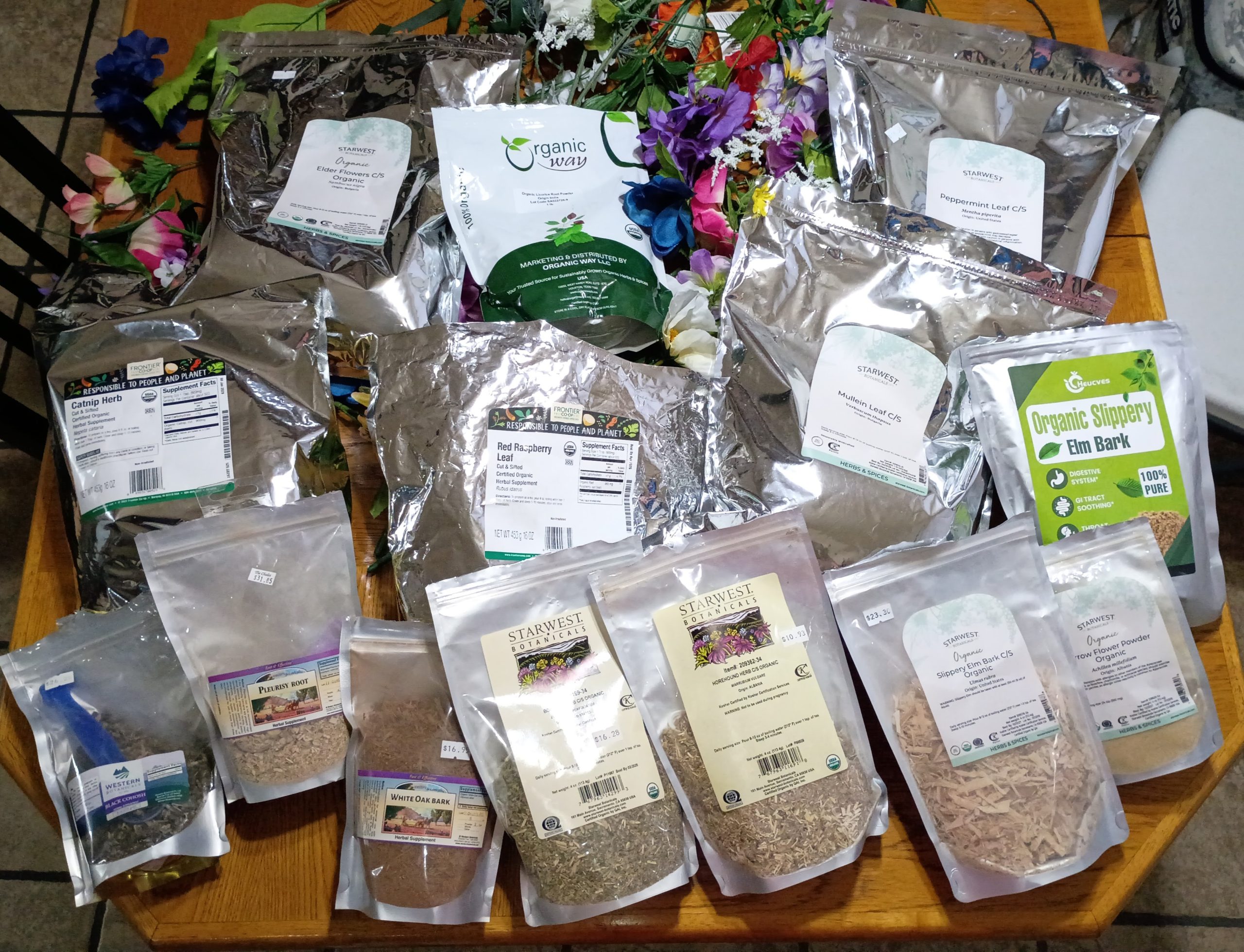
Our Herb Index- some of this information will be repeated when I write about our personal experience with measles, though that post will focus on the chronological experience and treating symptoms as they arose. But I think it is useful in this format for easy reference too.
These are the herbs we are using for our teas. For baths, also add Epsom salts.
Black Cohosh- This herb is often associated with women's health, especially for pregnancy and childbirth. However, Dr. Christopher classifies it as a nervine, with the tongue and cheek comment that maybe this is because women's issues result in tension and nervousness! From his "Herb Syllabus" book, page 38, it says, "Black Cohosh, as a nervine, feeds, regulates, strengthens, and rebuilds the nervous system. It acts directly in the spinal nerve, especially influencing the unstriped muscles. In cases of pain, such as headache, general aches and pains of influenza and similar ailments, the headache, backache and bone-ache of measles, scarlatina and small pox, Black Cohosh is very valuable." It isn't one of the tastier herbs. They say that herbs do not taste bad, only different. I think such a caution is especially applicable to this particular tea. It will taste less "different" with a little honey or blended with another, more familiar tea. It's a bitter herb.
Boneset- The Native Americans called influenza "break-bone fever" because of the pains in the bones that were similar to breaking a bone. Boneset is so named because it sets the bones to right, not because it will set a broken bone. During the fever part of measles, we felt such aches in our bones, and a boneset tea did wonders to releave that pain.
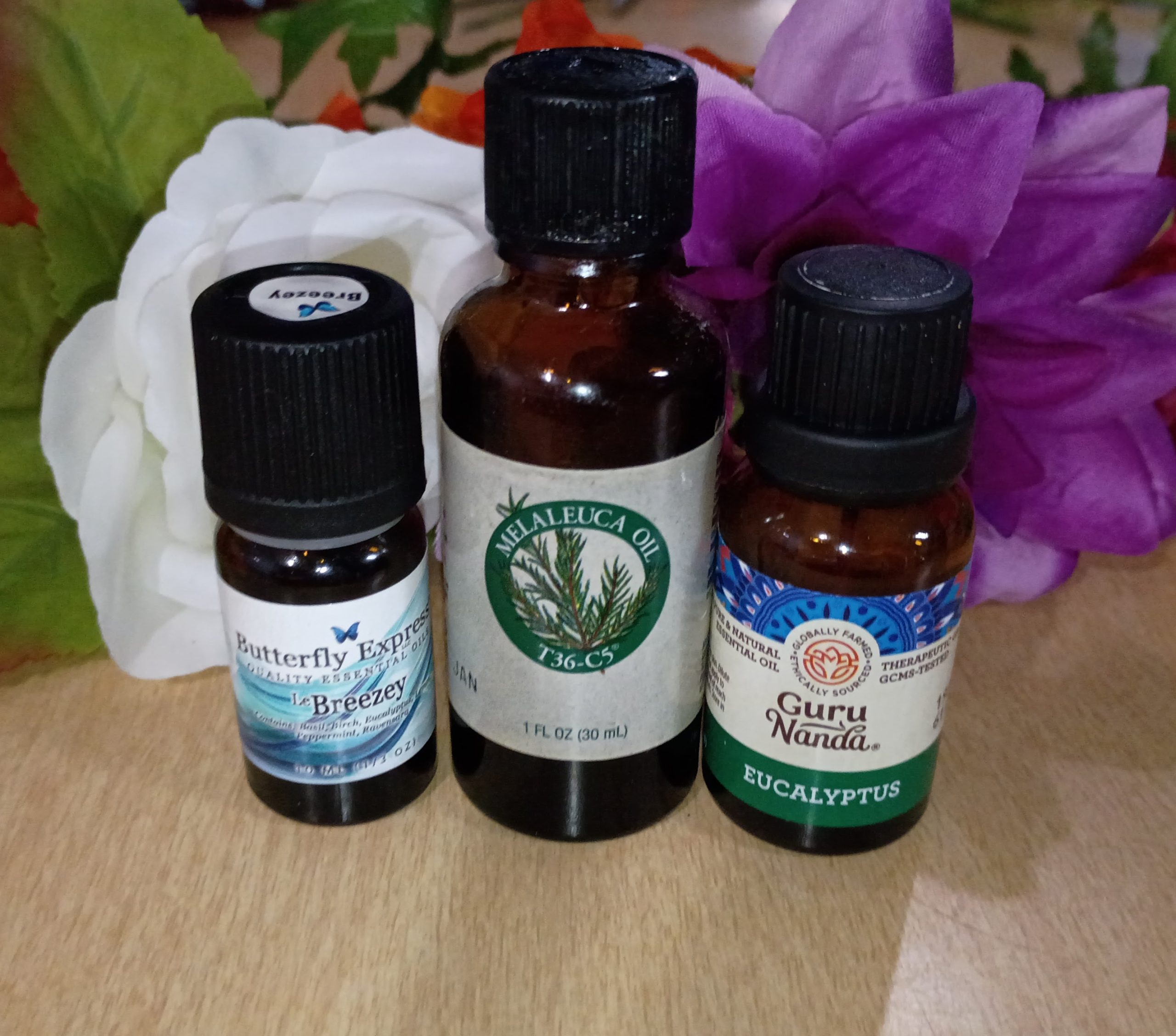
Breezey- An essential oil blend from Butterfly Express. We used it in our diffuser and also as a liniment on our toddler's feet while he slept. This blend is especially good to help with breathing, so we bought it upon recommendation. We were concerned about our son's oxygen levels that were a little low. Right after applying this oil that evening, they went up two points!
Burdock Root- This herb helps to purify and cleanse the blood, and has even been used as an antidote for poisoning. It is also a good source of nutrients to help build the body. HHHC recommends a bath or sponging with a tea made of burdock root, yellow dock and golden seal if the patient complains of itching from the measles rash. It is a great general tincture to have for many things.
Catnip- this is an especially useful herb for children since it is gentle. According to "The Little Herb Encyclopedia" by Jack Ritchason, "Catnip is often used in colds and flu (especially children) since it produces 'perspiration inducing sleep' without increasing body temperature. Catnip enemas will reduce a fever quickly for adults and children." It goes on to list many other benefits. Catnip makes a yummy tea that the kids like, and I've used it in their baths and, as mentioned, as an enema. It has become one of my new favorite herbs, and we don't even have a cat! We also bought a Catnip/Chamomille tincture by Butterfly Express that was handy to add to other teas. Chamomille is great for kids for its gentle calming effects.
Cayenne Pepper- Cayenne has very potent flavor, but it is also very powerful and effective. It works well to make whatever herb it accompanies to be more powerful. It brings oxygen to wherever it is used. For a rough cough, you can mix equal parts minced garlic and honey (less garlic for younger kids), and add a bit of cayenne for a very effective mix to open up the lungs and promote better breathing right away. Do not eat this concoction by the spoonful! It is very powerful. Instead, just put a little dab on your finger and suck it off for immediate relief in the throat and lungs, along with a "fear factor" moment of bravery for facing the powerful spicy flavor. I didn't give that concoction to the tiny children. If a patient becomes lethargic and weak, a bit of cayenne served in pineapple juice will bring them back into the land of the living really fast. Believe me, I know because my midwife gave me some once when I was in labor! Dr. Christopher was a huge promoter of the healing properties of this herb. If you use it in a linement, a protective layer of olive oil to protect the skin is suggested.
Christopher's ANTSP Formula- This is short for Anti-spasmatic. It contains skullcap, lobelia, cayenne, valerian root, skunk cabbage, myrrh gum and black cohosh. We bought this the morning after one of our kids had a cough that sounded croup-like before we treated it with garlic. As we were dealing with respiratory issues, I felt drawn to treat the children's symptoms as though it were the croup. In HHHC under croup, it is suggested to give this extract as a liniment on the chest. Because it has cayenne in it, we rubbed a layer of olive oil on first, which also helps it to spread and stay on the skin since this is not an oil, it's a tincture. The kids reported being able to breathe better after this tincture was applied. This formula can be taken internally as well, and we did. There was a point when one of our kids got a bit shaky with his fever and was frightened. We gave this formula in a little water followed by cuddles and a talk about Minecraft to distract, and together they quickly brought our child to a calmer place of equilibrium. We followed it with a protein shake.
Christopher's Ear & Nerve Formula- Contains blue cohosh, black cohosh, blue vervain, skullcap, and lobelia. We used this formula to guard against ear infections. A couple of our kids did report feeling like there was a little fluid in their ears, but it didn't hurt. We put 4 drops of garlic oil and 4 drops of Ear and Nerve into each ear, along with cotton balls to guard against spilling. It is important to do both ears since an infection often will go from one ear to the other. We treated the ear that bothered them least first since some of it will drip out when they turn over to do the other one, and we wanted the best treatment in the affected ear. I also rubbed it just behind the ears. This formula was very effective for our kids! It can also be applied to the feet, especially if only doing preventative work, or if their ears are sore. NEVER PUT LIQUIDS IN THE EAR WHEN THE EAR DRUM IS RUPTURED! We also used this formula on our toddler's feet as he was healing to guard against any nerve damage he may have received from his fever, as a precaution.
Christopher's Lung and Bronchial Formula- Contains mullein, lobelia, pleurisy root (formally comfrey), chickweed, and marshmallow root. I especially pulled this one out when coughing sounded rough as it helped clear the lungs. If you only get one of the two, I recommend the ANTSP, which has similar effects.
Elder Berry- This berry is famous for boosting the immune system. It also tastes great, which is a huge plus in children's medicine. I added dried berries in some of our decotions to improve the flavor.
Elder Flowers- The berries and flowers both come from the elder tree. This is a flower that was especially beneficial for our toddler, and I wish I would have known about it earlier in his journey. Once recognized, I saw it recommended everywhere and wondered how I missed it! In HHHC, Dr. Shook is quoting as saying, "For the treatment of fevers of all kinds, colds, and influenza, this remedy of elder flower and peppermint leaves is a safe, sure and speedy remedy. Aside from being anti-febrile, elder is an all-around alterative, blood purifier and general systemic cleanser."
It goes on to quote Henry Box, who said "For colds, influenza, fevers, inflammation of the brain, pneumonia (inflamation of the lungs), stomach, bowels or any part, this is a certain cure. I have never known it to fail, even when given up, and at the point of death. It will not only save at the eleventh hour, but at the last minute of that hour. Besides, it is so safe and harmless that you cannot use it amiss."
The recipe is 1/2 an ounce of elder flowers, 1/2 an ounce of peppermint leaves, and 1.5 pints of boiling distilled water poured over them and allowed to steep 20 minutes.
It is the youngest children who are at risk of febrile seizures, which are usually harmless but scary to witness. Encephalitis is one of the scarier risks of measles and is associated with SSPE, which I'll talk about more in another post. I believe that nervine herbs stand as a guard against these risks, and Elder Flowers are especially good for young children.
Eucalyptus- We used eucalyptus oil in our diffuser to boost the immune system. It is also a primary ingredient in some of my kids' favorite teas, which they drank freely at their own will. It's yummy! I also bought Dr. Christopher's "Kid-e-Mune" tincture, which is eucalyptus and cinnamon in a glycerin formula. It's tasty and they enjoyed taking it throughout the day for a little boost.
Eyebright Herb- One of the symptoms of measles is heavy and fatigued eyes. In children with vitamin A deficiencies, a tragic complication of measles can be a loss of vision and even blindness. With all of the added vitamins in even our sugary cereals, this is generally not a concern in the US, but is still something seen in 3rd-world countries. But I digress- measles is hard on the eyes, and this herb can help. See Goldenseal.
Feverfew- This herb is primarily known today for helping with headaches, while its namesake is often forgotten. It is great for fevers and inflammatory issues. It will reduce a fever, and I found myself wishing we had it in the middle of the night when our toddler began to struggle, and a night owl friend suggested this herb when researching natural alternatives to Tylenol, so we bought some the next day. More on that story later. We didn't use it afterwards since we felt elder flower was the herb our toddler needed instead.
Garlic- Measles is a virus, and garlic is one of the most potent anti-viral herbs out there. We mixed equal parts minced garlic and petroleum jelly as a paste on the feet. From HHHC page 174, "The low vibration petroleum jelly will not be absorbed into the skin as will anhydrous lanolin or a vitamin ointment. The petroleum jelly holds the garlic in suspension whereas the high vibration ointments would be absorbed and leave the garlic exposed to the bare skin which will blister it." I'll share pictures in the personal experience post. This treatment really helped. However, even with the petroleum jelly and an initial layer of olive oil to protect the skin, a few of the kids had a layer of skin break off the bottom of their feet all at once. This was painless and cleared up on its own, but was nevertheless an effect which we suspect was due to the night we used the garlic paste on the feet. See Cayenne.
Ginger- Great for congestion and for its body-cleansing properties. It can help clear the lungs. From my pregnancies I am intimately aware of how helpful this herb is for nausea. We definitely dealt with nausea during measles. We have those gin gin candies, but they weren't as effective for us as candied ginger slices and ginger tea. Ginger will also help when mucus in the lungs becomes thick. We also made fresh juices with carrots, celery and a bit of fresh ginger root for general nutrition. Ginger is a very potent herb, and so yummy!
Goldenseal Root- this one was referenced in HHHC to make an eyewash during measles, equal parts with eyebright, and raspberry leaf. We haven't done the actual eyewash, but have soothed the eyes with little cotton circles dipped in the same tea and let them sit over the eyes when they were sore. Some of the kids absolutely loved this and pretended they were in a spa since they've seen pictures of people with cucumber slices on their eyes. In general, goldenseal is excellent for the mucous membranes and aids with congestion. It's also an antiseptic. See White Oak Bark. Incidentally, our midwife gives her moms goldenseal to help umbilical chords dry up and fall off more quickly, and it works remarkably well for that too.
Horehound- This herb is great for coughs. We mixed it with mullein for a strong medicinal tea taken in small doses, and also in our cough syrup.
Licorice Root- This is a great herb for digestive issues and to keep the bowels moving. It also tastes great. In HHHC pg 140 there is a confectionery recipe for children involving minced dried fruits like raisins, licorice root powder, slippery elm bark powder, flaxseed powder, and molasses. They make it in one of the videos in the course. It is a gentle laxative that is safe for young children who might not take other medicinal herbs. Licorice has a pleasant taste and is good for coughs, so we used it in our homemade cough medicines.
Lobelia- This herb is great for congested lungs, increasing perspiration, and is generally great for cleansing the body. Be aware that taken alone on an empty stomach it can induce vomiting. Dr. Samuel Thomson of 19th century fame claimed to have discovered its uses, and he recommended it so often for so many maladies that those who followed his methods were often called "lobelia doctors". Dr. Christopher used this herb a lot too. While I did buy a lobelia tincture and we used it a bit, especially for congested lungs, I found myself more drawn to Dr. Christopher's formulas, all of which contain lobelia.
Marigold- Although we did not use this herb, I have since found many historical references to its use during measles, so I wanted to give it an honorable mention.
Mullein Leaf- This is a fantastic herb for the lungs. We used mullein to make a strong tea taken in small doses to help clear the lungs. This video by Dina Falconi shows how to make a strong tea- don't be afraid to use a lot of herb! We made the same thing, only we mixed in horehound. We also used it in cough syrup. See White Oak Bark.
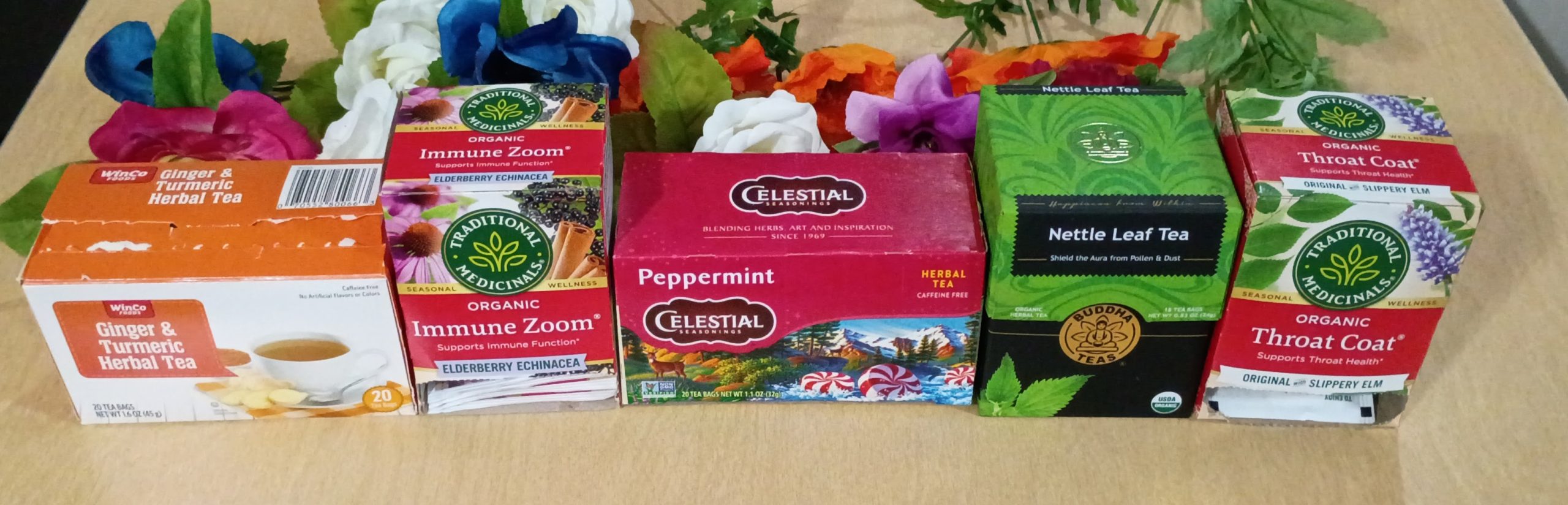
Nettle- Yes, as in stinging nettle. While the live plant can cause stinging, the dried leaves do not have this effect, and it is actually a very safe herb. It is nourishing and great for pregnancy and lactation. I didn't give it to the kids, but I drank a lot of nettle and red raspberry leaf tea to help keep up with an increased demand for breastmilk. Historically, nettle was used as an antidote for poison, and it is known to help purify the blood. I have been taking it to help rid my own body of toxins as my case of measles was unusual- more on that later.
Onion- A potent vegetable we were sure to have stocked before the kids all got sick. We used it to make cough syrup. An onion lightly baked and cut in half, once cooled, makes an excellent poultice for an ear infection. Fortunately we didn't need them for that, but I bought a few night caps to hold them in place just in case they were needed.
Peppermint- Oddly enough, this popular herb was one our herb shop didn't have in bulk at the time, so I just bought a bunch of peppermint tea from the grocery store. Peppermint is fantastic for the stomach and general digestive system. It helps keep things flowing smoothly, which comes back to the whole "measles with a cleanse" aspect. In addition to being useful and effective, it tastes wonderful. The kids love it and are used to it, so it has been an important part of our herbal teas I've been making to drink. I vary the other ingredients, perhaps, but there's almost always peppermint because the kids love it, and it's great for measles.
Pleurisy root- This one is aptly named because it is so beneficial for cleansing the lungs. It was widely used by the North American Indians, and was adapted by the Europeans in turn. Again from Jack Ritchason's book, "Pleurisy root has a powerful diaphoretic action which first increases the body temperature which in turn, opens the pores and sweating follows. Pleurisy root opens up the lung capillaries, which action helps release any thick mucus, thinning it for easier discharge of the congested material..." and goes on. I used it for baths and tea blends for drinking. While helpful, my kids didn't like the texture. A finer filter is recommended. I didn't mind it myself, but the root is rather powdery and there were comments about feeling like there was grit stuck in the throat.
Red Raspberry Leaf- This is one I didn't have to go out and buy because I use it a lot as a pregnant and lactating mother. No other herb comes close as a mother's tonic. For our purposes here with measles, it is high in iron, it enriches the blood (which is working very hard during this illness!), it helps rid the body of mucus, and helps control the bowels. We were drinking it, bathing with it, and flushing the bowels with it (I chose to do half raspberry and half catnip for our enema tea).
Red Root- We did not use this herb during measles. However, I have had a prolonged illness following my brief and bizarre brush with the measles, which we theorize has to do with dormant toxins being released into my system without being flushed out the normal way. We are working on detoxing my system and were drawn to this herb. It is also somewhat of a patriotic herb since American colonists during the revolutionary war would drink an herbal tea made from this plant when they were boycotting tea from England. It has the nickname "New Jersey tea" More on the history and uses here.
Slippery Elm Bark- We made a decoction of pleurisy root and slippery elm bark and mixed it with a mullein infusion for a powerful tea to help with pneumonia symptoms. Boy, I sure learned why it's called "slippery"! There was a gelatinous coating that formed around the bark while it simmered, which was really fascinating. Slippery elm is very gentle on the digestive system, and can help with constipation. It is also highly nutritious, and used to be given to tiny infants as young as 2 weeks old because it is so gentle and wholesome. We know breast is best much longer now, but even today it is recommended as a first baby food for older babies. It is gentle, it is nourishing, and is equally beneficial to young and old, sick and whole. In "Herb Syllabus Dr. John R. Christopher", page 621 it says, "Dr. Christopher taught that Slippery Elm is one of the most valuable medicines in the world. It will heal rapidly but gently and strengthen the system as it heals." I saw recipes online for homemade cough drops made with a thick healing tea of your choice, such as horehound and mullein, and mix it in equal parts with slippery elm powder. Roll it out and let it dry and you will have powerful and inexpensive cough drops. I never made them, but there are great YouTube videos demonstrating the process if you're interested. We added a little to some applesauce for our toddler to eat. It doesn't have much of a flavor at all.
Tea Tree Oil- We tried the whole Melaleuca (MLM company) thing years ago and did come to appreciate this wonderful herb. They have an entire book dedicated to how it can help with just about everything. While it does, I think that there are a good many other powerful herbs out there too! The marketing can be true and also hype, in my opinion. Anyway, we used the oil in our diffuser. In their book "The Melaleuca Wellness Guide" there is a small section on measles. The first paragraph explains the symptoms, followed by this; "In well-nourished children and adults, measles usually pass without complications. In malnourished or unhealthy individuals, great care must be taken to prevent a weakened immune system. Preventing ear infections, bacterial infections, and pneumonia is a primary goal. To prevent respiratory complications, use a warm steam vaporizer in the person's room with 10 drops of T36-C5 and 2 capfuls of Sol-U-Mel. Drink Melaleuca Herbal Tea 3 to 6 times each day." T36-C5 is tea tree oil. If you don't have a steam vaporizer, you can simply boil water in a pot and cover your face and the pot with a towel to breathe in the oils. We favored the diffuser running in the bathroom during a hot bath. There were lots of hot baths between all of the sick kids, and those who were more stuffy were encouraged to take a book into the room or visit with the bather. That's what shower curtains are for, privacy when the bathroom becomes a social club!
Valerian Root- This one kept getting mentioned on "useful for measles" lists. It has calcium and magnesium. It is a calming herb that helps decrease anxiety and helps one to sleep well. It also helps with pain. We got it in little chewable tablets. My 2-year-old said "That tastes disgusting!" I didn't think they were that bad, and older kids had mixed reviews, though one did say that they thought it helped them feel more relaxed and it helped with the pain. It tastes better than black cohosh at any rate!
White Oak Bark- One of our children had a rough night with a bad cough that initially sounded almost like croup until he cleared the phlegm. Our immediate treatment was the cayenne-honey mixture and the garlic paste mentioned elsewhere on the page, which really helped to stabilize his breathing and brought the cough down. However, he coughed so hard that his tonsils became inflamed and swollen. My husband was led to a couple of recipes in Dr. Christopher's book "School of Natural Healing", which we merged into one, minus the persimmon, which we lacked. I made him a gargle made from a strong decoction of white oak bark, an infusion of mullein, and a couple of capsules of goldenseal powder tapped out of their capsules. My husband told him to gargle it every time he was uncomfortable. This brought him immediate relief every time he did it, and it lasted for about 2 hours before he needed another swig. The swelling was dramatically reduced within 12 hours and was completely gone within 24.
Yarrow- I bought it as a powder, but already had it in capsule form and I gave it to my kids during the "sweating" phase to help their spots blossom. It has an acquired taste, so for younger kids, this might be a good option. Yarrow helps the body to sweat. It's also fantastic in a bath. My kids have fond memories of using yarrow during their chicken pox baths as well- it makes the water bright yellow, and that's funny. The tincture form was handy for adding a bit to any other tea. Fun fact about yarrow: It's Latin name is achillea millefolium. It is named after Achilles, whose mother, in some versions of the story, dipped her son in a large cauldron of yarrow tea to give him super strength and healing abilities. She held him by his ankle, which was not dipped in the magical tea, and he died from a wound to his heel. Achilles is also said to have used yarrow to heal his soldiers after battles.
Yellow Dock- Dr. Christopher says if the patient complains of itching, to bathe them with a tea made of yellow dock and burdock root and/or golden seal. From Jack Ritchason, "Yellow Dock is an excellent blood cleanser, tonic and builder, working through increasing the ability of the liver and related organs to strain and purify the blood and lymph system, it achieves its tonic properties through astringent purification of the supply to the glands. Yellow Dock roots has one of the highest iron contents in nature and is an effective tonic treatment for anemia during pregnancy and anemia in general. It is used to treat skin diseases, liver disorders and iron deficiency..."
Zinc- Helps with poisoning in the nerves and the brain- a possible complication if the measles eruptions or discharges are suppressed. Other signs of poisoning during measles are twitching, convulsions, or gritting the teeth. Zinc is also a generally helpful supplement. As a homeopathic, it was recommended to help finish off the measles. It wasn't available in that form locally. I simply had some Zinc gummies in our cupboard that I gave the kids.